
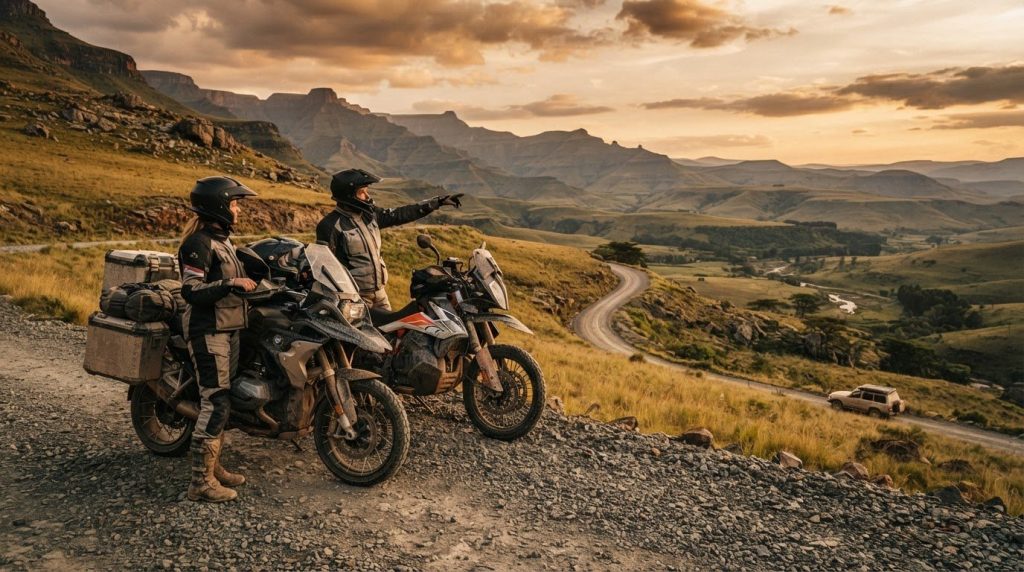
What if the toughest part of a South African ride wasn’t wondering whether your bike or backup would let you down? A South Africa motorcycle tour for experienced riders should deliver demanding roads, raw landscapes and machinery that’s ready for the journey, without turning every remote stretch into a test of survival.
You’re not looking for a watered-down itinerary. You want the rhythm of a mountain pass, the focus required on gravel and the reward of wildlife and wide-open scenery along the way. It’s equally reasonable to expect well-maintained bikes and dependable support when the route takes you far from familiar roads.
This guide explores how African Endeavors brings technical riding and considered logistics together across South Africa’s Wild Coast, Drakensberg and Kruger regions. You’ll discover what makes its all-inclusive motorcycle safaris suited to veteran adventurers, from high-performance adventure and dirt bikes to local guidance and a support vehicle for luggage and mechanical assistance. We’ll also look at private group options for riding clubs, so you can focus on the terrain, the scenery and the ride ahead.
Key Takeaways
- Learn why South Africa’s changing terrain calls for sound off-road judgement and steady control, not just speed.
- Find out how to assess challenging routes and choose terrain that suits your experience and riding style.
- See how a support vehicle can act as a tactical advantage on remote routes, while helping keep your bike clear of luggage.
- Prepare for extended days in the saddle with a focus on endurance, practical gear and a resilient mindset.
- Compare the African Endeavors options to find a South Africa motorcycle tour for experienced riders that fits your preferred style of adventure.
The Evolution of Adventure: Why South Africa Demands Experienced Riders
South Africa rewards riders who can read the ground as quickly as the horizon changes. A 2026 expedition is more than a long ride between scenic stops: it’s a considered journey through contrasting landscapes, where smooth tarmac can give way to gravel, loose sand or broken shale. The appeal lies in that constant shift, and in having the judgement to adjust your pace, line and focus as the surface changes.
A scenic cruise and a technical safari ask different things of a rider. The first can be about covering distance and enjoying the view; the second demands active decisions, physical control and sustained concentration, especially when a mountain track is uneven or conditions alter under your tyres. For a seasoned motorcyclist, challenge isn’t an obstacle to enjoyment. It’s part of the reason to ride.
That doesn’t mean sacrificing autonomy. It means having the skill to make measured choices, manage energy and stay present in the landscape rather than simply chasing speed. Adventure biking in South Africa is the blend of endurance and technical precision needed to ride varied terrain with control over sustained distances.
Beyond the Tarmac: The Technicality of South African Routes
Gravel passes and mountain tracks can be unpredictable: loose stones may shift beneath a tyre, while ruts, washouts or changes in camber call for careful line selection. Conditions can also vary with elevation and weather. A clear stretch below the peaks may lead into cooler air, mist or rain higher up, changing visibility and grip. Experienced riders know to reassess rather than carry the same pace into every section.
Avoiding the ‘Tourist Trap’ Itinerary
A route built chiefly around easy mileage and frequent photo stops may leave confident off-road riders wanting more. The goal isn’t difficulty for its own sake, but a day that asks for focus and leaves the satisfying tiredness of a genuine ride. Local South African motorcycle enthusiasts can help identify routes that feel raw whilst remaining navigable, balancing terrain with conditions and the group’s ability.
That distinction matters across South Africa’s varied touring landscapes. Even a celebrated coastal stretch such as the Garden Route offers a different rhythm from a remote gravel pass; the right itinerary matches the riding style to the ground. African Endeavors’ local guidance and fully supported safaris let experienced riders pursue that balance, with a support vehicle carrying luggage and providing mechanical assistance. The aim is not to remove the challenge, but to make room for more attention on the ride itself.
Mapping the Challenge: Iconic Routes for the Seasoned Adventurer
South Africa’s riding rewards variety. A single expedition can move from coastal tracks to mountain gradients and open gravel, with each region testing a different part of a rider’s skill. The Great Escarpment is a standout for its sweeping elevation changes, winding passes and far-reaching views, offering the kind of sustained, varied riding that makes the country a compelling destination for experienced motorcyclists.
Challenge doesn’t mean riding hard everywhere. In wildlife areas, observation and respect for the surroundings take priority; the pace should suit the conditions and the purpose of the route. Elsewhere, open terrain can invite a more spirited rhythm when it’s appropriate. Before setting out, consult the UK Government’s South Africa road travel advice as part of planning for road safety and security.
The Wild Coast: Navigating Rugged Coastal Enduro
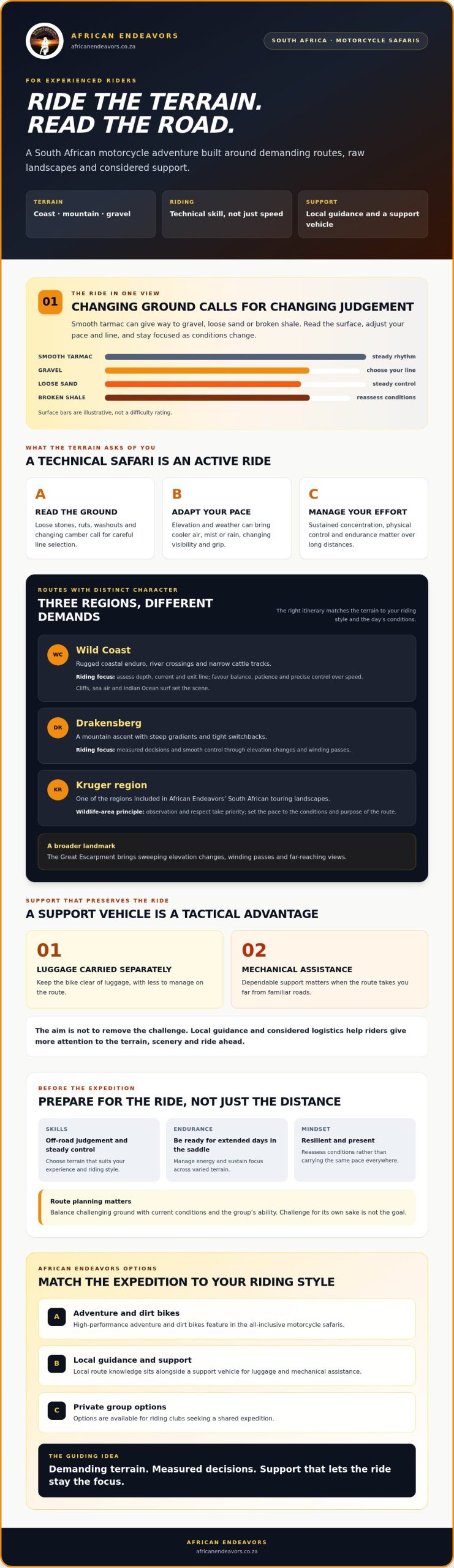
On coastal enduro terrain, the surface can demand constant attention. River crossings call for a careful assessment of depth, current and exit line, whilst narrow cattle tracks reward balance, patience and precise control rather than speed. The cliffs, sea air and Indian Ocean surf make the setting unforgettable, but the ride remains the focus. For riders seeking this technical style, an off-road dirt bike tour Wild Coast puts the emphasis on challenging terrain with local guidance.
There’s an almost unmapped feel to some coastal tracks, though that doesn’t mean riding without a plan. Conditions and route choices matter. Local South African motorcycle enthusiasts can help distinguish a genuinely rewarding line from one that’s unsuitable for the day, keeping the experience adventurous whilst remaining considered.
The Drakensberg Ascent: Mastering the Great Escarpment
In the Drakensberg, steep gradients and tight switchbacks ask for smooth throttle inputs and deliberate gear selection. Choose a gear that gives you control on the climb and a composed descent; abrupt inputs can unsettle the bike, particularly on loose or damp surfaces. Amongst the peaks, cloud and changing weather can reduce visibility and alter grip quickly, so experienced riders should be ready to ease off and reassess.
Further north, the Kruger region brings a different kind of focus: wildlife viewing calls for a measured pace and close attention to surroundings, rather than treating the park as a high-speed riding stage. African Endeavors’ supported safaris include the Wild Coast, Drakensberg and Kruger regions, with a support vehicle for luggage and mechanical assistance on tours. Explore the South African motorcycle tour options to compare the riding character of each destination.
The Support Vehicle Paradox: Why Experts Don’t Ride Alone
“I don’t need a support vehicle.” For a capable rider, that instinct makes sense: self-reliance is part of the appeal. But on remote terrain, carrying every bag and contingency on the bike can add weight and fatigue without adding to the ride. A support vehicle isn’t a concession to inexperience. It’s a tactical advantage that lets you focus on the track while practical backup travels with the group.
With luggage carried separately, the motorcycle can feel lighter and more responsive, particularly when the route calls for careful balance and repeated changes of line. That doesn’t make difficult terrain easy, nor does it remove the rider’s responsibility to make sound decisions. It simply leaves less weight on the bike and more attention for the surface, the group and the conditions ahead. For a South Africa motorcycle tour for experienced riders, support can enable a more focused approach to technical riding, not reckless speed.
Mechanical Resilience in Remote Landscapes
A puncture or minor spill on a rugged track can interrupt a day and become more complicated when assistance is far away. African Endeavors provides a support vehicle for luggage and mechanical assistance on its tours, adding a practical layer of resilience without promising that every problem can be fixed immediately. Local guidance also helps riders approach remote routes with informed judgement. Consider a fully supported motorcycle tour South Africa as an option when you want independence on the bike alongside logistical backup.
The distinction matters: support doesn’t take control away from an experienced rider. It can reduce the consequences of carrying unnecessary loads or facing a mechanical issue far from ordinary services, while allowing the group to make decisions with assistance available. That’s a more useful kind of autonomy: freedom to concentrate on the ride, backed by a considered plan.
Recovery and the Details Beyond the Ride
Technical riding draws on concentration and physical energy. A comfortable place to rest, good food and time to recover can help make the next day’s riding more rewarding, but accommodation standards and daily arrangements vary by itinerary. Before choosing a tour, check what’s included, how luggage is handled and what support is available if a bike needs attention.
Likewise, don’t assume that fuel stops, permits or park-entry arrangements are handled unless the tour information confirms it. African Endeavors describes its motorcycle safaris as all-inclusive, reducing planning friction, and provides support vehicles for luggage and mechanical assistance. For riding clubs, bespoke private group options can help shape an expedition around shared experience and ability. Explore the supported motorcycle safari options and confirm the practical details that matter to your group.
Preparing for the Expedition: Skills, Gear, and Mindset
Over ten or more days, strong riding is about repeatable control, not peak speed. Fatigue can dull judgement and make rough ground harder to read, so prepare for consistency: practise riding for sustained periods, build your fitness gradually and arrive rested. The aim is to finish each day with enough focus to make good decisions, even when the terrain keeps changing.
Use this checklist to make preparation practical:
- Build endurance: Include longer rides in your training and practise managing effort across the day.
- Check your kit: Test protective clothing, boots and luggage before departure, not on the first morning of the tour.
- Plan for changing conditions: Pack adaptable layers for a broad temperature range, from cool starts near 5°C to warmer conditions around 35°C, as described in the itinerary brief.
- Prepare your attention: Stay alert to changes in surface, visibility and wildlife, and be ready to ease your pace when conditions demand it.
Technical Riding Skills for African Terrain
On gravel, practise a relaxed standing position where appropriate, with knees slightly bent and your weight balanced so the bike can move beneath you. On sand, smooth inputs and steady momentum can help maintain stability, but speed isn’t a substitute for reading the track or choosing a safe line. Braking on loose surfaces takes finesse: understand how the particular motorcycle’s ABS and traction control behave, check its handbook and seek instruction before changing settings. Don’t assume one setting suits every surface.
Essential Gear for Variable Climates
Choose protective gear that can adapt through layers: breathable clothing for heat, with waterproof or insulating layers available for cooler, wet or windy conditions. Properly fitted motorcycle boots should protect your feet and ankles on the bike, whilst remaining practical for short walks off it. A hydration system can make sipping water easier during riding, but the amount you need depends on conditions and your own requirements. Plan how you’ll carry water and replenish it along the route rather than treating a particular capacity as universally essential.
Good preparation also means knowing your limits. Experienced riders still benefit from local knowledge when terrain, weather or wildlife calls for a change of plan. African Endeavors’ guided safaris draw on local South African motorcycle enthusiasts, with support vehicles carrying luggage and providing mechanical assistance on tours. That support complements your own skill; it doesn’t replace sound judgement or attentive riding.
Match your preparation to the terrain and riding style you want to take on. Explore African Endeavors’ motorcycle safaris to consider which guided experience fits your goals.
Choosing Your African Endeavors Expedition
The right expedition starts with the kind of riding you want to do. African Endeavors offers guided motorcycle safaris across South Africa’s Wild Coast, Drakensberg and Kruger regions, alongside distinct dirt bike and Harley Davidson experiences. Local South African motorcycle enthusiasts provide route guidance, whilst the all-inclusive format and support vehicle for luggage and mechanical assistance help keep logistics from competing with the ride.
For a South Africa motorcycle tour for experienced riders, compare the terrain and pace you’re seeking with the tour style, rather than choosing by scenery alone. Adventure routes suit riders drawn to varied landscapes and longer journeys; dirt bike safaris put the emphasis on off-road riding; Harley Davidson Scenic Tours offer a different experience, centred on the character of the machine and the road. Each asks for a different match between rider, bike and itinerary.
High-Performance Machinery: Adventure and Dirt Bike Options
A capable bike should feel suited to the route, the rider and the day’s conditions. Adventure bikes and dirt bikes serve different purposes, and factors such as power delivery, suspension feel and ergonomics can shape confidence on gravel or uneven ground. For a Kruger Park adventure bike safari, ask which motorcycle models are available for your departure and what checks are made before the ride. Exact 2026 fleet models should be confirmed directly, rather than assumed.
There’s a particular thrill in hearing a high-performance engine open into the vastness of the landscape, but the machine is only one part of the experience. Expert local guidance and a support vehicle for luggage and mechanical assistance give riders practical backing without taking away the challenge of the road.
Bespoke Private Expeditions for Veteran Groups
Riding clubs can explore a bespoke motorcycle safari South Africa to discuss a private group itinerary. Share your members’ off-road experience, preferred riding style and ambitions for the route; these details help frame a conversation about suitable terrain and tour options. Confirm what can be tailored, who will guide the group and how support is arranged before committing.
For a 2026 departure, review the relevant tour, then enquire directly about dates, itinerary details and bike models before making plans. Ask what’s included in the all-inclusive arrangement, and clarify any requirements specific to your group. That preparation helps you choose an expedition for the challenge you want, with fewer surprises between the first briefing and the first turn of the throttle.
Choose Your Route and Prepare to Ride
South Africa’s most rewarding rides ask for more than speed. They call for endurance, sound judgement and the ability to adapt as gravel, sand and mountain roads change beneath your tyres. For a South Africa motorcycle tour for experienced riders, the right support strengthens the adventure: a vehicle carries luggage and provides mechanical assistance, whilst local motorcycle enthusiasts guide the journey.
African Endeavors brings together guided routes, high-performance motorcycles and an all-inclusive approach designed to reduce planning friction. Choose the riding character that suits you, from adventure touring across the Wild Coast, Drakensberg or Kruger regions to off-road dirt bike safaris and Harley Davidson scenic tours. Riding clubs can also enquire about bespoke private group options.
Your next step is to compare the available tour styles, clarify which motorcycles are planned for your departure and check the itinerary details that matter to your riding goals. Explore our 2026 Guided Motorcycle Tour Packages and start shaping an expedition worthy of your experience. South Africa’s open roads and untamed tracks are waiting.
Frequently Asked Questions
Is a South Africa motorcycle tour safe for solo experienced riders?
Travelling alone doesn’t have to mean riding without support: experienced solo travellers can enquire about joining a guided tour, subject to its arrangements. African Endeavors provides local expert guidance and support vehicles for luggage and mechanical assistance, but no tour can remove every riding risk. Before booking, confirm the itinerary, group format, expected riding standard and what procedures apply if you need help during the journey.
What level of off-road experience is required for the Wild Coast tour?
A specific minimum skill level isn’t confirmed in the available tour information, so ask African Endeavors to assess your experience against the planned route. Be prepared to describe your confidence on gravel, loose surfaces and uneven tracks, as well as your experience handling an adventure or dirt bike off-road. Guided support is valuable, but it doesn’t replace the control and judgement needed to ride challenging terrain safely.
Can I bring my own motorcycle gear or should I hire it locally?
Bringing familiar, well-fitted protective gear is a practical choice, particularly for your helmet, gloves and boots. African Endeavors’ information confirms motorcycle provision as part of its guided safari packages, but doesn’t confirm whether riding apparel is available to hire. Check what the package includes before travelling, and ask about any gear requirements. Pack adaptable layers too, as temperatures and conditions can vary along a multi-day route.
How much of the tour is on gravel versus tarmac roads?
There isn’t a confirmed gravel-to-tarmac percentage for every itinerary. The balance depends on the tour and its route, so request a current itinerary with road surfaces and daily distances before choosing. Ask which sections are gravel, whether any are loose or particularly technical, and how the route may change with conditions. This information helps you match the ride to your off-road ability and expectations.
What happens if there is a mechanical failure in a remote area?
African Endeavors provides support vehicles on its tours for luggage and mechanical assistance. If a bike develops a problem, the guide and support team can assess the situation and provide assistance, helping the group manage the interruption. This is practical backup, not a guarantee that every fault can be repaired on the spot. Before departure, ask how the tour handles a breakdown that requires more extensive work.
Do I need a special licence to ride a 1200cc adventure bike in South Africa?
The tour information doesn’t confirm a separate licence rule for a 1200cc motorcycle. Check that your current licence entitles you to ride the relevant motorcycle category in South Africa, and verify requirements with the appropriate official authorities before travelling. Foreign riders are recommended to carry an International Driving Permit as well. Confirm the motorcycle’s exact model and licensing requirements with the tour operator before booking.
How do the support vehicles help during the motorcycle safari?
Support vehicles carry luggage and provide mechanical assistance on African Endeavors tours. With luggage off the motorcycle, you can ride without that additional load and give more attention to the route and changing surfaces. The vehicle also gives the group practical support if a mechanical issue arises. Ask the operator what assistance is included and how luggage is transferred between overnight stops on your chosen itinerary.
What is the best time of year for a motorcycle tour in South Africa?
Spring, from September to October, and autumn, from April to May, generally offer pleasant riding conditions across South Africa. For tours that include the north-east, the dry season around Kruger National Park runs from May to October. Conditions still vary by route and elevation, so check expected weather for your itinerary and pack layers. The best dates depend on the regions and riding conditions you want to prioritise.
