
The best long-distance motorcycle route in South Africa isn’t necessarily the shortest one. A direct ride can save time, while a scenic or mixed-surface plan can add variety, provided the daily riding time, road conditions and practical stops are realistic.
It’s natural to focus on the roads first. Yet fuel planning, luggage, changing weather and the possibility of mechanical trouble can shape the ride just as much. Plan those details well and the journey becomes less about watching the clock and more about enjoying the open road.
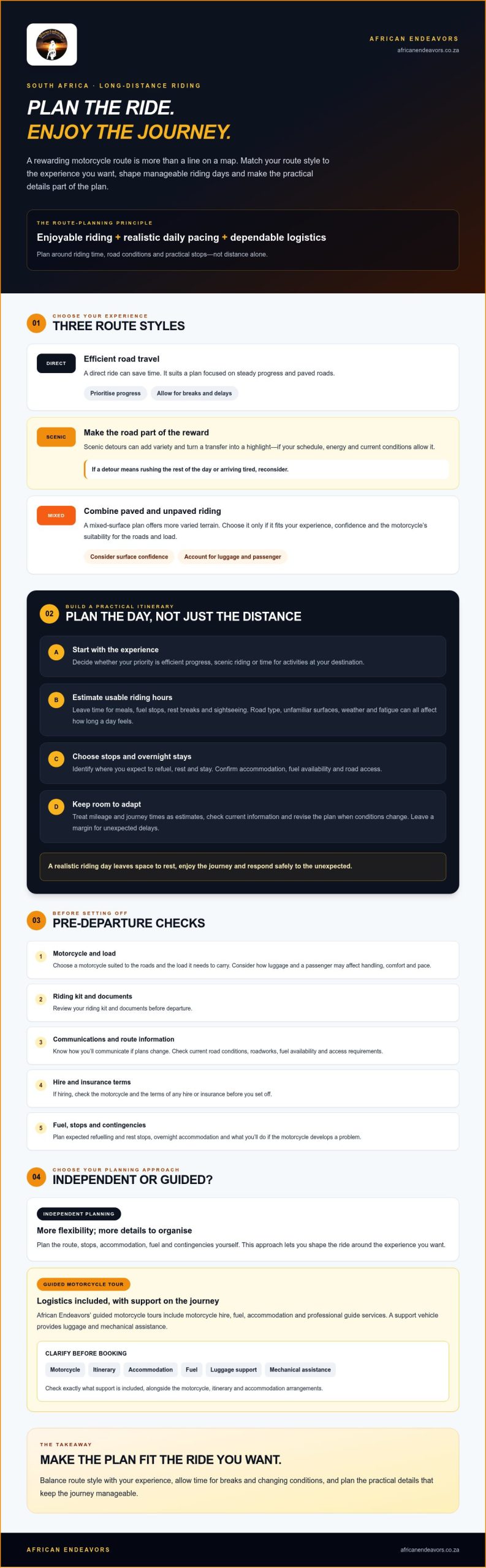
This guide compares direct, scenic and mixed-surface route styles, explains how to plan manageable riding days and lists what to check before setting off. It also covers guided support as an alternative to organising every detail yourself. African Endeavors’ guided motorcycle tours include motorcycle hire, fuel, accommodation and professional guide services, with a support vehicle for luggage and mechanical assistance. Before booking, clarify the motorcycle, itinerary, accommodation and exactly what support is included.
Key Takeaways
- Choose your route style based on the experience you want, whether that means efficient road travel, scenic detours or a mix of paved and unpaved riding.
- Plan each riding day around road type, weather, fatigue and time for breaks, not distance alone.
- Use a pre-departure checklist to review the motorcycle, riding kit, documents, communications and the terms of any hire or insurance.
- Compare independent planning with guided touring to decide how much flexibility you want and which logistics you’d rather leave to others.
- Before booking a guided safari, clarify the motorcycle, itinerary, accommodation, fuel and support arrangements, including luggage and mechanical assistance.
What makes a rewarding long-distance motorcycle route?
A motorcycle route is more than a line between a starting point and a destination. It’s a sequence of roads, rest stops and overnight stays, planned around the riding experience you want and the practicalities of getting there. For a Johannesburg to Kruger motorcycle route, that could mean prioritising steady progress, allowing time for changing scenery or building in wildlife-focused experiences around the journey.
The appeal lies in the contrast: open road and shifting landscapes, with the rhythm of riding balanced by time to pause and take in your surroundings. The destination matters, but so does the quality of each day along the way. For context on the destination’s geography, climate and biodiversity, see this overview of Kruger National Park.
A rewarding route balances enjoyable riding, realistic daily pacing and dependable logistics. Before setting out, check current road conditions, roadworks, fuel availability and access requirements using relevant, up-to-date information. Conditions can change, and a route that looks straightforward on a map may need adjusting on the day.
How to match a route to your riding style
Start with the kind of riding you genuinely enjoy. Relaxed road touring can suit riders who prefer paved roads, a measured pace and longer stretches between stops. Adventure-focused riding may appeal if you’re comfortable on unpaved surfaces and want more varied terrain. Neither approach is automatically better. The right fit depends on your experience and what you want from the ride.
Consider how much time you’re happy to spend in the saddle, your confidence on different surfaces and whether you’ll carry a passenger. Luggage adds weight and can affect handling; a passenger can also change comfort and pace. Choose a motorcycle suited to the roads you plan to ride and the load it needs to carry. Then allow your daily plan to reflect those choices.
Why the destination is only part of the journey
Overnight stops set the journey’s rhythm. A shorter riding day may leave room to rest, enjoy a meal or explore, whilst a longer one can make the trip feel more focused on covering ground. Plan around the time you want to ride, not just the distance on a map, and leave space for breaks and unexpected delays.
A scenic detour can turn a transfer into a highlight, but only if your schedule, energy and current conditions allow it. If it means rushing the rest of the day or arriving tired, reconsider. A strong plan gives you options: decide what matters most, identify where you can adjust and keep the ride comfortable as well as memorable.
How to shape a practical multi-day motorcycle itinerary
Build an itinerary in sequence, rather than starting with the biggest distance you hope to cover. First decide what matters most: efficient progress, scenic riding or time for activities at your destination. Then estimate how many hours you want to ride each day, choose useful stops and overnight stays, and check the logistics that make the plan workable. For the Johannesburg to Kruger motorcycle route, start with the experience you want and shape the day-by-day plan around it.
Distance is only one part of the calculation. Road type, weather, fatigue and breaks all affect how long a day feels in the saddle. Before departure, compare your route and travel-time estimates with current maps and conditions. Confirm fuel availability, accommodation, road access and how you’ll communicate if plans change. These checks help keep the Johannesburg to Kruger motorcycle route practical as well as rewarding.
Realistic riding days leave room to rest, enjoy the journey and respond safely to unexpected delays.
Build riding days around time, not distance alone
Estimate your usable riding hours after allowing time for meals, fuel stops, rest breaks and planned sightseeing. A route that looks manageable on a map may take longer if it includes slower roads, unfamiliar surfaces or weather that calls for a more cautious pace. Keep a margin in the schedule instead of planning to ride continuously from morning until evening.
Shorten the day when terrain is demanding, conditions are unsettled or you’re still getting used to the motorcycle. Treat mileage and journey times as estimates, not promises. Check them against current mapping and road information before setting off, and be prepared to revise the plan if conditions change.
Plan essential stops and contingencies
Plan each practical need separately: where you expect to refuel, where you can rest, where you’ll stay overnight and what you’ll do if the motorcycle develops a problem. Confirm accommodation and fuel options before departure rather than assuming a stop will be available when you arrive.
Have an alternative in mind for a delay, closure, poor weather or mechanical trouble. Share your planned route, overnight stops and emergency contacts with someone you trust, and agree how you’ll let them know if your plans change. For broader preparation, consult Arrive Alive road safety tips from SAnews.gov.za.
If you’d prefer help with planning and on-road logistics, review guided motorcycle safari options. Before booking, confirm the route, daily riding plan, accommodation, fuel and support arrangements with the operator.
Compare scenic, direct and mixed-surface motorcycle route styles
The right Johannesburg to Kruger motorcycle route depends on what you want the ride to feel like. A road-focused plan keeps the journey straightforward; a scenic itinerary makes room for viewpoints and leisurely stops; mixed-surface riding adds variety but calls for careful checks on the motorcycle, route and rider experience. Use this comparison to weigh the trade-offs before committing.
| Route style | Scenery | Riding time | Surface | Logistics and experience |
|---|---|---|---|---|
| Direct | More time moving between overnight stops, with fewer planned detours. | Can make progress more predictable, but traffic, roadworks and weather may affect timing. | Primarily paved roads, subject to route checks. | Useful for riders prioritising efficient travel and comfortable with longer stretches on tarmac. |
| Scenic | More opportunities to pause, enjoy changing landscapes and add points of interest. | Allow extra time for stops and slower sections; avoid packing the day too tightly. | Often road-focused, though the exact surface depends on the chosen roads. | Requires flexible timing and advance checks on road suitability, access and overnight plans. |
| Mixed-surface | Can offer greater variety and a more exploratory feel. | Progress may be slower, so plan conservatively and leave room for changing conditions. | A combination of paved and unpaved roads, where permitted and suitable. | Match the surface to your experience, tyres and motorcycle capability; verify access and current conditions. |
When a road-focused itinerary is the better fit
Choose a direct, tarmac-focused plan if your priority is reaching each overnight stop without adding detours. It can suit riders who prefer familiar road surfaces and a simpler daily structure. Still, don’t treat a mapped journey time as guaranteed: traffic, roadworks and weather can all change how long the ride takes. Check current conditions close to departure and keep your schedule adaptable.
When scenic or mixed-surface riding suits the trip
Scenic roads can make the journey feel like part of the destination, but extra stops and slower stretches need to fit your available time. Mixed-surface riding adds another layer of preparation. Confirm that your motorcycle and tyres suit the planned surface, and be honest about your experience, particularly if you’ll be carrying a passenger or luggage. Check access rules and current route conditions before including unpaved sections.
Independent planning gives you control over route choices, whilst a guided motorcycle safari can reduce some logistical demands. African Endeavors’ guided tours include motorcycle hire, fuel, accommodation and professional guide services, with a support vehicle for luggage and mechanical assistance. Confirm the specific itinerary, motorcycle, accommodation and support arrangements before booking.
Prepare your motorcycle, documents and daily riding plan
Preparation lets you focus on the road instead of sorting out preventable snags along the way. Before departure, check the motorcycle, confirm what your documents and insurance cover, and make sure your daily plan leaves time for water, meals and proper breaks. Keep the schedule flexible enough to adapt if weather, road access or other conditions change.
Check the motorcycle and essential riding equipment
Arrange a suitable inspection before a long ride. Ask for the tyres, brakes, lights and controls to be checked, and make sure luggage is secured so it won’t shift or interfere with handling. Wear protective riding gear, including gloves, boots and a properly fitting helmet, with layers suited to the forecast. If motorcycle hire is included, confirm with the provider which equipment is supplied and what you need to bring yourself.
Keep documents and communications organised
Check the requirements for your circumstances with the relevant providers and official sources. Don’t assume that a document, policy or access arrangement will apply automatically to every part of your journey.
- Licence and identification: Confirm your licence is appropriate for the motorcycle and carry the identification required for your trip.
- Insurance and hire: Check cover, exclusions, permitted use and the motorcycle provider’s terms before departure.
- Access: Verify current entry rules and any cross-area requirements with the relevant authority before planning to ride through or enter a restricted area.
- Navigation and contact: Save route information for offline use, carry a charged backup power source and keep emergency contacts accessible.
Share your intended route and overnight plans with someone you trust, and let them know how you’ll communicate if your plans change. Check current road access and conditions before setting off, then review them again if the weather or itinerary shifts.
Keep the day manageable: carry water, schedule regular rest stops and avoid treating your estimated arrival time as fixed. A pause or revised plan is preferable to pressing on simply to keep to the original timetable.
If you’d rather have support with motorcycle hire, fuel, accommodation and route logistics, review the Kruger Park & Panorama Route Tour. Confirm the motorcycle, itinerary, equipment, documents and included support with the operator before booking.
Choose between independent planning and a guided motorcycle safari
Independent planning gives you more control over route choices, daily timing and stops. It also leaves you responsible for coordinating the details, from motorcycle arrangements and accommodation to fuel planning, navigation and responding to changes on the road. A guided safari brings more of that organisation together through professional guidance and planned support, though you’ll need to check how the itinerary and group arrangements fit your preferences.
African Endeavors offers guided motorcycle safari packages, not self-guided motorcycle rentals. Its guided tours include motorcycle hire, fuel, accommodation and professional guide services, plus a support vehicle that assists with luggage and mechanical needs. These inclusions can reduce the number of moving parts you need to manage yourself, but confirm the specific tour details before making a decision.
What to confirm before booking a guided tour
Ask the operator for clear details before you commit. Check which motorcycle is included and whether it suits your riding experience, the planned surfaces and your luggage needs. Clarify the itinerary and expected daily riding, accommodation arrangements, fuel inclusions and what support the vehicle provides if a mechanical issue arises.
Also ask about riding expectations, group arrangements, cancellation terms and anything excluded from the package. Confirm dates and availability directly rather than assuming a particular departure is guaranteed. If you want help assessing the details, the guided motorcycle safari buying guide offers a useful place to start.
Decide which approach fits your priorities
Independent planning may suit you if you value flexibility and are comfortable arranging the motorcycle, accommodation, fuel stops and contingencies yourself. You’ll make decisions as the journey unfolds, while also taking responsibility for checking current conditions and adapting the route.
A guided tour may be a better fit if you’d rather have professional guidance and key logistics organised as part of a package. Neither approach is automatically right for every rider. Consider how much preparation you want to handle, how comfortable you are managing changes and whether the confirmed support matches your needs.
For a closer look at African Endeavors’ guided motorcycle tours, review the available tour options and ask the operator about the itinerary, motorcycle, accommodation, fuel and support before booking.
Set your route in motion with a plan that fits
A rewarding long-distance ride starts with choices that suit you. Decide whether you want a direct, scenic or mixed-surface journey, then shape each day around riding time, breaks and current conditions rather than distance alone. Check your motorcycle, documents, fuel and overnight arrangements before setting off, and leave room to adapt if plans change.
Independent planning offers greater control, while a guided safari can take some logistics off your hands. Guided packages from African Endeavors include motorcycle hire, fuel, accommodation and professional guide services, with a support vehicle to assist with luggage and mechanical needs. Confirm the specific itinerary, motorcycle and inclusions with the operator before booking.
To discuss a guided option, contact African Endeavors about its motorcycle safari tours and ask about the route and support included. Choose the approach that fits your riding style, then set off with a plan that leaves room to enjoy the journey.
Frequently Asked Questions
How long does a motorcycle journey between a major city and a wildlife destination take?
It depends on the route, road conditions and how much time you allow for breaks and stops. A direct, paved-road itinerary may take less riding time than a scenic route with detours, while unpaved sections or poor weather can slow progress. Check current mapping and conditions before departure, then plan around realistic riding hours rather than relying on a single journey-time estimate.
Is a long-distance motorcycle route suitable for a beginner?
It can be, if the route and daily riding demands match your experience. Before committing, consider your confidence in traffic, your ability to manage the motorcycle when it’s loaded and how comfortable you are with sustained time in the saddle. Build up gradually with shorter rides, choose familiar road surfaces where possible and avoid an itinerary that leaves little room for rest or changing conditions.
Can I ride a mixed-surface route on a road motorcycle?
Possibly, but suitability depends on the particular motorcycle, tyres, surface and your riding experience. A road motorcycle may not be appropriate for every unpaved section, especially if conditions have changed or the route is difficult. Check the motorcycle’s guidance, ask a qualified provider about its capabilities and verify that the road is open and suitable before setting out. If uncertain, choose a paved alternative.
What should I check before setting off on a multi-day motorcycle trip?
Arrange a motorcycle check covering tyres, brakes, lights and controls, and secure your luggage. Pack protective riding gear and weather-appropriate layers. Confirm your licence, identification, insurance cover and any hire terms with the relevant providers. Check current road conditions, access requirements, fuel availability and overnight arrangements. Save navigation information for offline use, charge a backup power source, carry water and share your itinerary and emergency contacts with someone you trust.
Is a guided motorcycle safari better than planning a route independently?
Neither option is automatically better; it depends on how much flexibility and logistical responsibility you want. Independent planning gives you control over route choices, stops and timing, but you organise the arrangements and contingencies yourself. A guided safari may suit riders who value professional guidance and coordinated logistics. Compare the itinerary, inclusions, riding expectations and support arrangements before deciding which approach fits your priorities.
What is usually included in a guided motorcycle tour package?
In African Endeavors’ guided tours, confirmed inclusions are motorcycle hire, fuel, accommodation and professional guide services. A support vehicle assists with luggage and mechanical needs during tours. Specific arrangements can vary, so confirm the itinerary, motorcycle, accommodation details and support provided for the tour you’re considering. Also ask directly about group arrangements, cancellation terms and any exclusions before booking.
How should I choose a motorcycle for a multi-day safari?
Choose a motorcycle that suits the planned road surfaces, your experience and the amount of luggage you’ll carry. Consider whether you can manage its size and weight comfortably, and whether it remains practical with a passenger if you’re travelling two-up. For a hired motorcycle, ask the operator about available choices, suitability for the itinerary and what equipment is supplied. Confirm these details before booking.
