
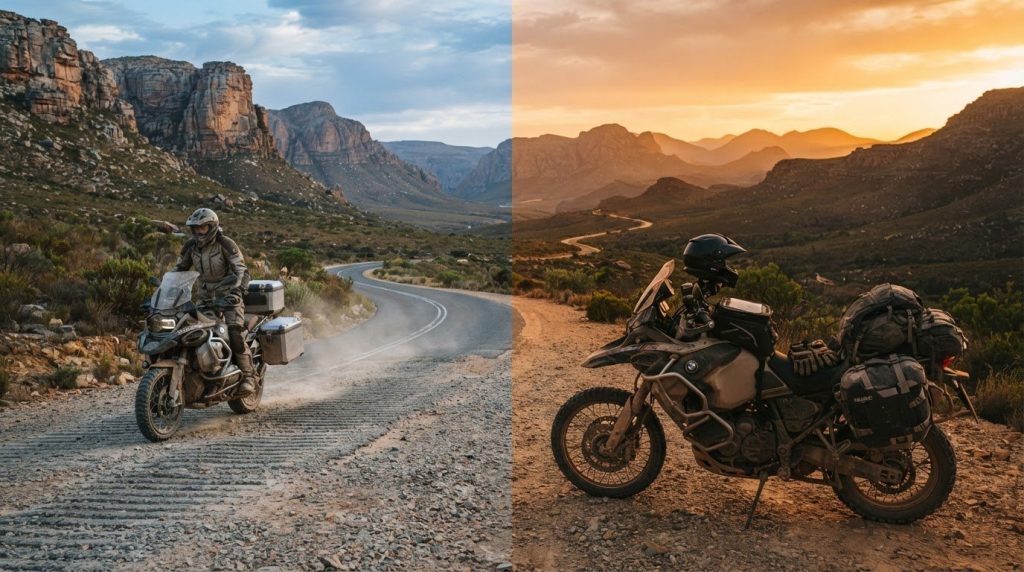
The best Cederberg ride isn’t the one that covers the most ground. The region’s dramatic passes and open gravel roads make long distances tempting, but Cederberg motorcycle routes can make very different demands on your bike, riding confidence and available daylight. The mix of tar and gravel, current road conditions and access matters just as much as the kilometres on the map.
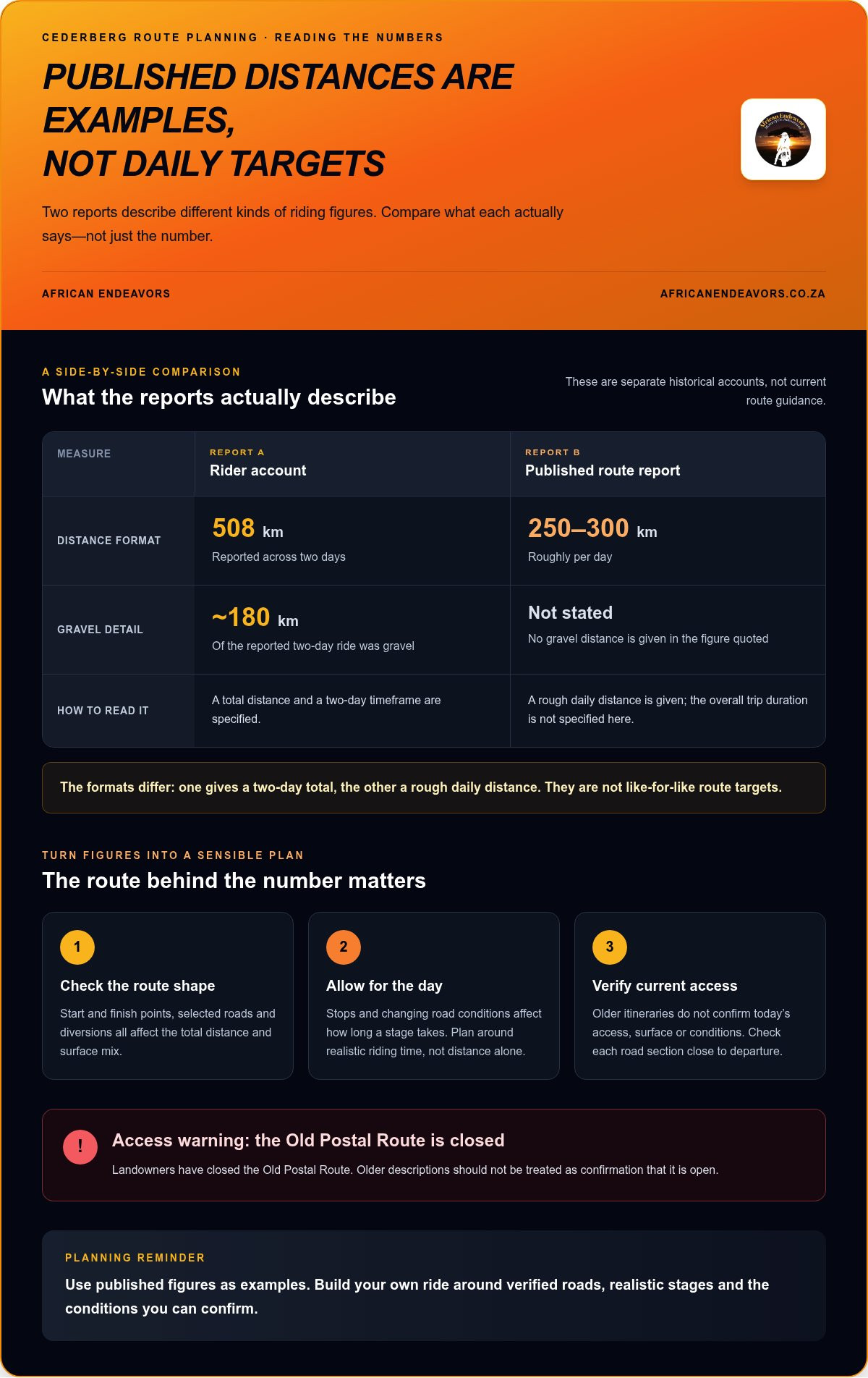
It’s easy to see why riders are drawn to the Cederberg: the landscape feels vast and untamed, and the road itself becomes part of the adventure. Yet corrugations, loose gravel, sand and slippery surfaces after rain can change the demands of a day in the saddle. Access can change too. Landowners have closed the Old Postal Route, so older descriptions should not be treated as confirmation that it is open.
This guide will help you compare route styles, assess the gravel-and-tar balance and choose a ride that suits your motorcycle, experience and available time. You’ll also find practical ways to check access and road conditions, plan realistic stages and account for fuel and daylight. The aim isn’t to chase distance, but to plan a ride you can enjoy from the first kilometre to the last.
Key Takeaways
- Shape a Cederberg ride around your start and finish, selected road sections and realistic time in the saddle, rather than distance alone.
- Compare tar-led, mixed-surface and gravel-heavy options against your motorcycle, tyres and confidence before settling on a route.
- Use named route features as planning examples, not as a ready-made itinerary. Check current access and conditions before departure.
- Plan each stage around daylight, fuel range, overnight stops and communications, particularly on remote roads.
- For a guided multi-day adventure, consider how motorcycle hire, accommodation, fuel, professional guiding and logistics can simplify the journey.
What makes Cederberg motorcycle routes worth planning carefully?
There’s a particular freedom to riding where the road feels remote, the surface shifts beneath your tyres and a dramatic mountain landscape opens around each bend. The Cederberg’s appeal lies in that changing character, but it also makes careful planning essential. A Cederberg motorcycle route is more than a line between two points. It’s a ride shaped by the mix of gravel and tar, the route’s length and elevation, and the time you have to complete it.
Distance alone can be misleading. A short day on loose gravel, narrow roads or steep bends may demand more concentration and take longer than a longer stretch of tar. Fuel, food and photo stops also reduce your available riding time. Published itineraries can show how a ride might fit together, but they’re snapshots, not guarantees of current access, surfaces or conditions. Check those details close to departure.
The mountain setting adds to the experience. The Cederberg mountains form a varied landscape, and a route can feel different as it winds through open country, climbs or descends, or narrows between rugged terrain. Don’t assume every section offers the same scenery or riding conditions.
What should riders expect from the route character?
Expect contrast rather than a uniform ride. A plan may combine winding gravel sections with tar roads that connect them, while elevation and road width can change the pace and feel of the journey. Loose gravel, corrugations, sand or slippery ground after rain can make riding more demanding. Treat named features such as Karoopoort, Katbakkies Pass and Blinkberg Pass as planning references, not promises about the surface or its current condition.
Why do two published route plans differ?
Published figures are examples, not dependable daily targets. A 2012 rider account reports 508 km over two days, including about 180 km of gravel; another published route report describes roughly 250-300 km per day. These are separate historical accounts, not current route guidance. Start and finish points, diversions, stops and selected roads all affect the total, so compare the route behind the figure, not just the number.
Before using an older itinerary, check each road section. A detour can change both the distance and surface mix, while a closure may make a previously published route unsuitable. Plan around realistic riding time and conditions you can verify, then leave room for the unexpected. That way, the Cederberg’s scale becomes a pleasure to explore rather than a distance to endure.
How can you shape a Cederberg motorcycle route into a memorable ride?
Start with the shape of the trip, not a list of famous roads. Decide where you want to begin and finish, how many days you have and what kind of riding you want each day. Then choose connecting road sections and check that the stages fit your available daylight and experience. This gives you room to adapt: if gravel looks too demanding or a road is inaccessible, you can revise the day instead of forcing the itinerary.
Use a current map to trace connections between your chosen features, and identify alternatives before setting out. The CapeNature Cederberg Wilderness Area information is a useful reference for understanding the protected area and its visitor context. Don’t assume that a nearby road is open to motorcycles or that access is permitted. Check route status separately and shortly before departure.
Which route features can anchor an itinerary?
The R355, Karoopoort, Katbakkies Pass and Blinkberg Pass are useful names to plot while sketching a ride. They can help you visualise possible route components and consider how gravel roads might connect with tar sections. But a named road or pass is a planning anchor, not proof of access, surface or condition. Check each feature on a current map and verify its status before departure.
How should you divide the ride into manageable stages?
Plan around realistic riding hours, not a distance target. A day with gravel, changing surfaces and several stops will use time differently from a straightforward tar connection. Before finalising a stage, account for the daylight left after fuel, food and photography breaks, and leave time for rest and navigation checks. The day should still feel manageable if progress slows.
For a two-day outline, map the first day from your chosen start to a suitable overnight stop, then plan the second day from there to your finish. Treat this as a framework, not a fixed itinerary. Less experienced gravel riders might shorten a demanding section or choose a more conservative alternative. Even confident riders benefit from a deliberate pace and planned breaks. Don’t fill every available hour with riding.
Before you go, mark fuel and food options, overnight arrangements and possible diversions on your map. Save the route for offline use if your navigation setup allows, and agree on a simple regrouping plan if you’re riding with others. Leave room for an unplanned stop, a slow section or a change of plan. That breathing space is part of the ride, not wasted time.
Thoughtful sequencing turns Cederberg motorcycle routes into more than a string of names on a map. It gives each day a clear purpose without making the landscape a race against the clock. For a guided multi-day adventure in South Africa, African Endeavors’ guided motorcycle safari experiences include professional guiding and practical trip logistics.
Gravel or tar: which Cederberg motorcycle route suits your bike and skill?
There’s no single surface mix that suits every rider. Gravel suitability depends on the motorcycle, its tyres, the conditions on the day and your confidence on loose ground. Before choosing between tar-led, mixed-surface and gravel-heavy Cederberg motorcycle routes, consider how each option will feel over a full day, especially if your bike is loaded or you’re still building gravel experience.
What changes when a route includes gravel?
On loose surfaces, steering and braking can feel less predictable than on tar. Smooth inputs, a measured pace and extra following distance give you more room to respond to changing ground. Corrugations, rain or recent grading can alter the surface, so yesterday’s account may not describe today’s ride. Conditions can also vary along a route. Avoid assigning a fixed difficulty rating without current, route-specific information.
Compare the broad route styles before committing. These are planning categories, not guarantees about particular roads:
- Predominantly tar: Limits time on loose surfaces, but still calls for attention to bends, elevation, road width and the day’s conditions. Depending on its tyres and the route, a road-focused motorcycle may suit this style better than a gravel-heavy plan.
- Mixed surface: Combines tar connections with gravel sections, so you’ll need to adapt your pace and riding approach as the surface changes. It offers variety, but the length and condition of the gravel sections matter more than the label.
- Gravel-heavy: Involves more sustained time on loose or uneven ground. Consider your experience, how the bike handles when loaded and its intended use before choosing this style.
Use the comparison as a prompt, not a verdict. Route descriptions may not reflect recent rain, grading or other changes, and a motorcycle category alone can’t establish suitability. Verify current surfaces and conditions before deciding.
How do you match motorcycle and rider to the route?
Be honest about your recent gravel experience, your comfort controlling the motorcycle at a measured pace and how it handles with luggage. Adventure bikes and road-focused motorcycles can both work for some plans, but neither category guarantees a match. Tyres, load and the actual surface all affect the decision, as does your confidence when conditions change.
Compare your capability with the most demanding section, not the easiest part of the day. Ask yourself:
- Have I ridden loose gravel for a sustained period, rather than just crossed a short patch?
- Can I manage the bike confidently when it’s loaded, including at low speed?
- Do the tyres and motorcycle suit the surfaces described for the route?
- Can I adjust my pace or take an alternative if the surface feels beyond my comfort level?
If the surface is uncertain or your experience is limited, choose a more conservative plan and keep the option to change it. A well-matched ride leaves you with attention for the landscape, rather than making every kilometre a test.
What should you check before riding Cederberg motorcycle routes?
Make your final checks close to departure. In a remote-feeling landscape, a route that looked straightforward during early planning can be affected by closures, changing surfaces, weather or fuel constraints. Older blog itineraries and saved map lines are useful references, but they aren’t live road-status updates. Verify current access and conditions, then make sure your daily stages, overnight arrangements and backup options still work.
What route and weather information needs a fresh check?
Check the status of each road section and any access restrictions using current information. Review the forecast for the actual riding period, not just the season, and consider how rain or strong conditions could affect gravel and daylight. If a section is closed or its surface has changed, revise the plan rather than assuming your map will show the update.
Use this pre-departure checklist to bring the practical details together:
- Route status: Recheck access, closures, diversions and surface conditions shortly before setting out.
- Weather and daylight: Review the forecast for each riding day and plan to reach your overnight stop with daylight to spare.
- Fuel range: Match planned stops to your motorcycle’s range and the roads you’ll actually ride. Some stretches have no petrol stations, so map the distance between fuel stops and allow for detours.
- Accommodation: Confirm your overnight arrangements and allow for a change of plan if delays affect your arrival.
- Navigation and communications: Download maps for offline use and carry a paper map as a backup. Mobile coverage can be uncertain, so don’t rely on a signal for navigation or check-ins.
How can you prepare for a remote-feeling ride?
Before departure, share your intended route and expected check-in points with someone, including what to do if you’re delayed. Carry water, suitable protective equipment and basic emergency essentials, including a first-aid kit. Keep your plan accessible offline, and make sure everyone riding with you knows the intended overnight stop and agreed alternatives.
Give the motorcycle a careful pre-ride inspection, especially before a day that includes gravel. Check the tyres for visible damage and suitable condition, test the brakes and lights, look over the chain if fitted, and make sure luggage is secure. Follow the motorcycle manufacturer’s guidance for checks that require specific measurements or procedures. Don’t guess at mechanical limits.
Preparation can’t remove every uncertainty, but it gives you more room to respond calmly when a road, forecast or timetable changes. For professional guiding and practical logistics on a multi-day ride in South Africa, explore guided motorcycle safari options. African Endeavors’ packages include a professional guide, support vehicle, fuel, accommodation and motorcycle hire.
Turn your Cederberg route research into a supported motorcycle adventure
You’ve weighed the surface mix, considered what each riding day will demand and learnt why current access and road conditions matter. Now decide how much of the planning and logistics you want to manage yourself. Independent route planning offers flexibility; a guided multi-day safari adds structure and practical support. Neither is automatically the better choice. The right fit depends on your priorities, experience and preferred level of independence.
What does professional support change on a multi-day ride?
A professional guide leads the riding experience, while a support vehicle and planned logistics can reduce the practical details you need to coordinate on the road. On a multi-day journey, that can make it easier to organise luggage and focus on riding, rest stops and scenery. It doesn’t remove the need to ride within your ability or follow current route information.
Guided safari packages can bring together motorcycle hire, accommodation, fuel, professional guiding, a support vehicle and trip logistics. Having these elements planned as part of a package can simplify preparation compared with arranging each separately. The value is not simply covering more ground; it’s having a considered structure for the journey beyond the route line itself.
Support can suit riders who would rather focus on the ride than coordinate every overnight detail, fuel plan and luggage decision. Consider what you want your attention on each day: navigating and managing arrangements independently, or riding with a guide while logistics are part of the wider plan. Either way, base your expectations on the itinerary and current conditions.
How can readers choose a next step after route research?
Start by deciding whether independent planning or a guided safari better suits your priorities. If you value choosing each road section and adapting the schedule yourself, keep refining your route and contingencies. If you’d prefer professional guidance and coordinated logistics, consider a guided multi-day adventure. African Endeavors offers adventure bike, Harley Davidson and off-road dirt bike safari experiences across South Africa.
As you compare possibilities, look beyond the motorcycle. Consider the riding style you enjoy, how much planning you want to manage, and whether accommodation, fuel and support arrangements would make the experience more appealing. That gives you a clearer basis for choosing a journey, without treating distance or a famous road name as the measure of its quality.
The Cederberg rewards thoughtful choices: match the route to your bike and confidence, build each day around realistic demands, and verify conditions before riding. For a supported journey, explore guided motorcycle safaris with African Endeavors.
Choose the ride that feels right, then make it happen
The right Cederberg motorcycle routes aren’t simply the ones that look impressive on a map. They’re the ones that let you enjoy the ride, stay present in the landscape and finish each day with enough energy for what comes next. Let that guide your planning, whether you prefer to organise every detail yourself or want professional support on a multi-day journey.
African Endeavors’ guided safari packages bring motorcycle hire, accommodation, fuel, professional guiding and logistics together. A support vehicle is provided for luggage and mechanical assistance during tours, taking some practical demands off the rider’s shoulders. The company’s guided experiences cover South Africa.
Ready for a supported ride? Explore African Endeavors’ guided motorcycle safaris.
Frequently Asked Questions
Are Cederberg gravel roads suitable for riding after rain?
Not always. Rain can leave gravel slippery or wash loose material across the riding line, changing how the bike responds. Check conditions for the specific road before setting off, and be prepared to delay, shorten or reroute your ride if the surface feels beyond your comfort level. Don’t assume a road has dried just because the weather has cleared. Conditions can vary between exposed and shaded sections.
Can a beginner ride a motorcycle route through the Cederberg?
Yes, if the route matches their experience and the day’s conditions. A first-time gravel rider could start with a shorter plan that limits time on loose surfaces, then build confidence before attempting more demanding sections. Practise basic gravel riding on familiar roads first, and avoid making a challenging pass the first test of new skills. A riding companion or professional guide can also provide support.
Do I need an adventure bike for Cederberg motorcycle routes?
No single motorcycle type is right for every route. Adventure bikes are designed for varied riding, but the actual surface, tyres, load and rider experience all matter. A road-focused motorcycle may be more appropriate for a tar-led plan than for sustained gravel, depending on the specific bike and conditions. Assess the most demanding section before deciding, rather than relying on the motorcycle category alone.
Should I download maps before riding in the Cederberg?
Yes. Save the planned route for offline use before you leave, then check that the downloaded map covers the full area and opens on your phone in flight mode. Carry a paper map or written route notes as a backup, and keep your device charged with a suitable power source. Navigation tools can help you follow your plan, but they don’t confirm that a road is currently open.
Should I book overnight accommodation before a multi-day motorcycle ride?
It’s sensible to arrange overnight accommodation before departure, particularly if your route depends on reaching a specific stop. Check the booking details, arrival arrangements and what to do if riding delays affect your arrival time. Keep an alternative in mind so a late finish or changed route doesn’t leave you improvising at the end of a long day. Recheck your overnight plan after making any major route changes.
What should I do if a planned road is closed?
Don’t ride around a closure or assume a route shown on a map remains accessible. Stop somewhere safe, check the closure information and choose a verified alternative that fits your fuel range and remaining daylight. If there isn’t a suitable option, retrace your route or adjust the day’s plan. Allow extra time to update navigation and let someone expecting your check-in know about the change.
How should I plan fuel for a Cederberg motorcycle ride?
Plan fuel stops around your motorcycle’s real-world range, the roads you’ve selected and a reserve for detours. Some stretches have no petrol stations, so don’t set out assuming you can refuel along the way. If fuel is available only at a premium, plan conservatively rather than relying on it. Recalculate if a closure changes your route.
