
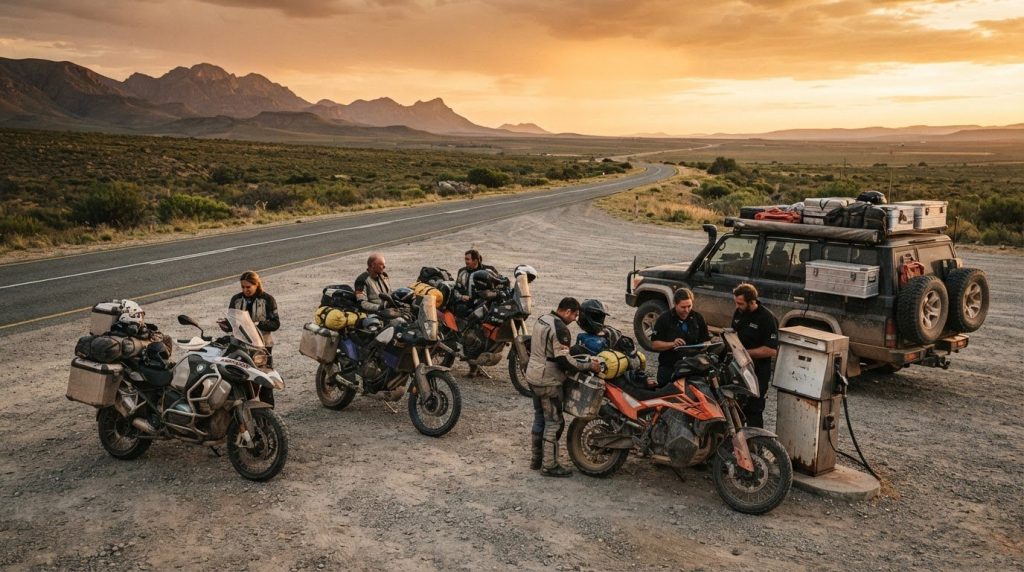
A fuel stop needn’t break the rhythm of a ride. On a long-distance route, knowing how far the motorcycle can travel, where fuel is available and how the group will regroup helps make each stop part of the day’s plan. A well-coordinated guided motorcycle tour support vehicle contributes to that plan, so riders can focus on the road without carrying every logistical concern themselves.
It’s natural to wonder how far you can ride before refuelling, whether the group will need to wait and what the support crew is doing whilst you’re on the move. Practical range planning and clear coordination help answer those questions, while leaving room to adapt to changing conditions.
This guide explains how to estimate a sensible riding range, plan fuel stops with the guide and support crew, and respond when availability or timing shifts. African Endeavors’ pre-scheduled multi-day guided packages include fuel and support-vehicle logistics. The vehicle assists with luggage and mechanical support. Knowing how those roles fit together helps each stop feel like a considered part of the journey, not an improvisation.
Key Takeaways
- Estimate practical range using the motorcycle’s fuel consumption and usable tank capacity, then allow a margin for conditions that may affect consumption.
- Plan fuel stops around the actual itinerary. Check route-dependent station hours, payment options and fuel availability before departure.
- A guided motorcycle tour support vehicle helps coordinate the day, carries luggage and provides mechanical assistance, but doesn’t guarantee repairs or uninterrupted travel.
- Clear roles for riders, the guide and support crew help fuel stops fit the group’s pace and make regrouping easier.
- African Endeavors’ pre-scheduled multi-day packages include motorcycle hire, fuel, accommodation, professional guiding and support-vehicle logistics.
Why fuel stops matter on a guided motorcycle tour
Fuel-stop logistics cover riding range, stop timing, group regrouping and contingencies, so refuelling fits into the day’s route. A fuel stop is more than a pause to top up the tank. It affects the pace of each riding stage, when the group can rest and how much flexibility remains if road conditions or timings change.
A planned stop gives riders a shared destination and the guide a chance to keep the group together. An unscheduled delay can arise when someone needs fuel earlier than expected, a station is unavailable or road conditions affect the schedule. Not every change is a crisis, but the day runs more smoothly when there’s room to adapt.
Plan a South African ride around its actual itinerary rather than assuming fuel stations are evenly spaced. General guidance on motorcycle touring also treats fuel planning as part of preparing for longer journeys, particularly where services may be less frequent. The aim isn’t to predict every pause exactly. It’s to agree on a practical rhythm and a way to adjust it.
How fuel stops shape a day on the road
A realistic day includes riding stages, refuelling and breaks, with time for the group to arrive, fill up and regroup before setting off again. Before departure, riders should know the next agreed stop and where to meet there. That shared plan helps everyone manage their pace and avoids confusion about whether to continue or wait.
Plans still need flexibility. Weather, road conditions, delays or a rider’s changing range can affect when the group reaches a stop. The guide can adjust timing and regrouping as circumstances require, without treating the original itinerary as immovable.
What riders and guides need to coordinate
Before setting off, agree how the group will regroup, where the next stop is and how to communicate if someone becomes separated or needs to pause. Keep the plan clear: know the agreed meeting point and follow the guide’s instructions if timing changes. A guided motorcycle tour support vehicle is part of the wider logistics, but riders still need to understand the day’s plan.
Riders are responsible for monitoring their own fuel level and speaking up early if their range feels tight. The guide coordinates the route, stop timing and regrouping. Raising a concern early gives the guide time to consider it before it becomes a last-minute interruption. The rider flags the issue, and the guide manages the group response.
African Endeavors’ pre-scheduled multi-day guided packages include fuel and support-vehicle logistics, with the vehicle assisting with luggage and mechanical support. That support helps manage the practical flow of the journey. Sensible planning and clear communication keep expectations realistic, so riders can focus on the road with less guesswork.
How to estimate fuel range and plan motorcycle stops
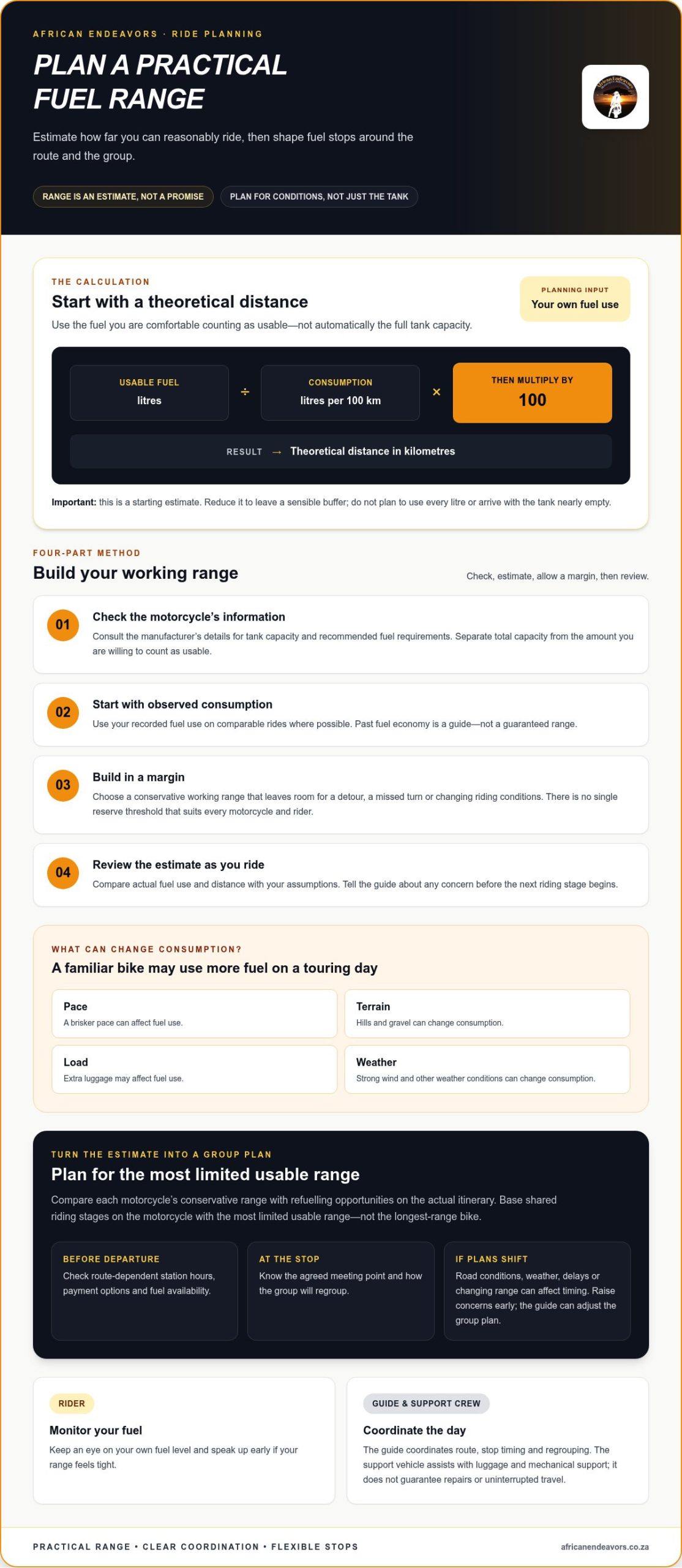
Practical range is the distance you can reasonably plan to ride on the available fuel, allowing for changing conditions instead of relying on the tank’s theoretical maximum. It’s an estimate, not a promise. Your previous fuel economy is a useful starting point, but the next day’s ride may use more fuel.
Use this method before setting out:
- Check the motorcycle’s information. Consult the manufacturer’s details for tank capacity and recommended fuel requirements. Distinguish total capacity from the amount you’re comfortable counting as usable for planning.
- Start with observed consumption. Use your own recorded fuel use on comparable rides where possible. If consumption is expressed in litres per 100 kilometres, divide usable litres by that figure and multiply by 100 to estimate a theoretical distance.
- Build in a margin. Don’t plan to use every litre or aim to reach a station with the tank nearly empty. Set a more conservative working range that allows for a detour, a missed turn or changing conditions.
- Review the estimate during the ride. Compare actual fuel use and distance with your starting assumptions. Raise any concern with the guide before the next stage begins.
Calculate a conservative usable range
Past fuel economy is a guide, not a guaranteed range. A brisker pace, hills, gravel, extra luggage, strong wind and other weather conditions can change consumption. Even a familiar motorcycle may use more fuel on a loaded touring day than on an easy ride. The Motorcycle Safety Foundation’s long-distance riding guidance is a useful reference for trip preparation, but your estimate still needs to reflect your motorcycle, load and route.
Use your observed consumption and the amount of fuel you’re willing to count as usable to calculate a planning figure. Then reduce it to leave a sensible buffer. There’s no single distance or reserve threshold that suits every motorcycle and rider. Be cautious if your consumption records are limited or come from very different riding conditions.
Turn range estimates into riding stages
Compare the conservative range for each motorcycle with refuelling opportunities on the actual itinerary. Plan stages around the motorcycle with the most limited usable range, rather than assuming every rider can comfortably cover the same distance. This gives the group a shared basis for choosing stops without using the longest-range motorcycle as the benchmark.
Keep arrival times flexible. A slower pace, a route change or an extended break may shift the schedule, so treat timings as estimates and keep the next agreed stop clear. Monitor your fuel and tell the guide early if the plan feels tight. African Endeavors’ guided multi-day packages include fuel and support-vehicle logistics. Explore guided motorcycle safari tours for a journey where practical planning supports the pleasure of the open road.
How a guided motorcycle tour support vehicle coordinates fuel stops
A support vehicle is part of a coordinated team, not a substitute for riders knowing their own motorcycles. The guide manages the route and agreed stops; riders monitor their fuel and communicate concerns; the vehicle assists with luggage and mechanical support. Clear roles help the group move between planned stops without assuming every rider has the same range or that every delay can be avoided.
Before departure, the guide briefs the group on the next stop, where to regroup and how to raise a concern if plans change. The support crew can then align its role with the day’s route. At a stop, riders can refuel and regroup whilst the guide checks that the group is ready to continue. Timing remains responsive to road conditions.
| Who | Fuel-stop responsibility |
|---|---|
| Rider | Monitor the motorcycle’s fuel level, refuel as planned and promptly tell the guide about a range concern or mechanical issue. |
| Guide | Set the route and agreed regrouping points, communicate the next stop and coordinate adjustments to the group plan. |
| Support vehicle | Assist with luggage and mechanical support as part of the tour logistics, without guaranteeing a repair or carrying spare fuel as an assumed provision. |
What the support vehicle contributes to the day
Luggage support means riders don’t have to carry all their tour luggage on the motorcycle, while keeping items needed during a riding stage accessible. The vehicle also provides mechanical assistance if an issue arises. This support can help the crew respond, but it isn’t a promise that a repair will be completed on the spot. Fuel-stop planning remains a separate task, based on the route and the motorcycles’ practical range.
What riders still need to manage
Keep an eye on your fuel gauge and don’t wait until a stop is urgent to raise a concern. Tell the guide early if your fuel level, motorcycle or riding pace may affect the agreed plan. Follow the group’s regrouping instructions, so a change in timing doesn’t leave riders uncertain about where to meet or whether to continue.
Preparation still matters. Before setting off, understand your motorcycle’s fuel requirements, make sure you’re ready for the planned ride and listen to the guide’s briefing. A support vehicle complements these habits; it doesn’t remove the rider’s responsibility to monitor the motorcycle or communicate clearly.
African Endeavors’ pre-scheduled multi-day guided packages include support-vehicle logistics alongside professional guiding, motorcycle hire, fuel and accommodation. The vehicle provides luggage and mechanical assistance, while riders and crew each have a clear role in keeping the day organised. That shared understanding makes the support useful: practical backing on the road, with riders still engaged in the journey.
Build a flexible fuel-stop plan for a South African long-distance ride
A route line on a map won’t tell you whether a fuel station will be open, accept your preferred payment method or have fuel available on the day. Build the plan around the actual itinerary: identify likely stops along each riding stage, then check current details before departure. This is especially useful when alternatives are limited, because a change at one stop may affect the next stage and the group’s timing.
A useful plan has a primary stop and a clear decision process if it can’t be used. If a station is closed, for example, the guide can assess the next suitable option against the group’s fuel situation and agree on what happens next. Riders shouldn’t independently head towards different alternatives. Follow the agreed instructions so the group can adapt together.
Before departure: verify the day’s fuel plan
Review the day’s riding stages and proposed stops with the guide. Check current information on route-specific opening times, fuel availability and payment arrangements, and note a practical alternative where the itinerary allows. Agree where the group will regroup if timings shift, so everyone knows how a change will be communicated and where to meet.
Use this checklist: confirm the route and planned stops, check station hours, fuel and payment options, identify an alternative, and agree how the group will regroup if plans change.
- Primary stop: Note the intended refuelling point and how it fits the group’s practical range.
- Alternative: Identify another suitable option on the route, rather than assuming a nearby station will be open or stocked.
- Group plan: Make sure riders know who to tell if their fuel level or the expected timing becomes a concern.
During the ride: adapt without losing group coordination
Conditions may change after the plan is made. A delay, altered pace or unavailable station can affect the next stage’s timing. If you’re concerned about your remaining fuel, tell the guide promptly, before the situation becomes urgent. Don’t assume mobile coverage will be available, or that a station will offer particular services or payment methods without checking.
If a stop needs to change, follow the guide’s agreed instructions. The guide can coordinate the group’s response and communicate a revised stopping or regrouping plan. Riders should avoid making separate decisions that leave others unsure where to go. A guided motorcycle tour support vehicle is part of the wider tour logistics, but it doesn’t remove the need to monitor your own fuel or follow the group plan.
Keep the fallback simple: raise the issue early, wait for the guide’s direction, then regroup at the agreed point before continuing. That gives the group a shared response without pretending every disruption can be predicted or every delay avoided. African Endeavors’ pre-scheduled multi-day guided packages include fuel and support-vehicle logistics alongside professional guiding. Explore guided motorcycle tours for a South African journey where the logistics are part of the experience.
What to expect from a guided motorcycle tour support vehicle
A guided motorcycle tour support vehicle is part of a managed itinerary, working alongside the professional guide and riders to support a multi-day journey. It provides luggage and mechanical assistance, while the guide coordinates the ride and riders remain responsible for their own motorcycles and preparation. The vehicle is a practical part of the experience, not a promise that every mechanical issue can be resolved or every delay avoided.
African Endeavors’ pre-scheduled multi-day packages include motorcycle hire, fuel, accommodation, professional guiding and support-vehicle logistics. Understanding what the package covers helps you distinguish included arrangements from personal expenses or optional purchases. Review the package details as part of preparing your budget, rather than assuming every travel cost is included.
How package logistics support the riding experience
The support vehicle is one element of a professionally guided itinerary. With luggage assistance, riders can focus on the ride without carrying all their tour luggage on the motorcycle. Mechanical assistance offers practical support if an issue arises, without guaranteeing an on-the-spot repair. The guide leads the group through the planned journey and coordinates its progress.
This structure can make a long itinerary feel more manageable. Riders still take part in briefings, follow the group plan and attend to their own riding needs, but don’t have to organise every logistical detail independently. Included fuel and support-vehicle logistics sit alongside the other stated package inclusions. Consider personal spending and optional purchases separately.
Decide whether a guided format suits your ride
Consider how you want to spend your attention on the road. A guided format may suit riders who value professional guiding, a shared group plan and organised multi-day logistics. If you prefer to make more decisions independently, consider how much route and day-to-day planning you want to handle yourself. The right fit depends on the balance of structure and independence you enjoy.
For a group with particular preferences or trip requirements, African Endeavors also offers bespoke private-group bookings. A tailored itinerary can shape the ride around the group’s needs whilst retaining a guided approach. Find out more about planning a bespoke motorcycle safari.
Before choosing, consider what you want included in the package, what you’re happy to manage personally and how you prefer to ride with others. A well-planned guided tour brings those elements together, leaving space to take in South Africa’s changing landscapes while the guide and support logistics help keep the journey organised. Explore African Endeavors’ guided tour options to find an itinerary that suits the way you want to travel.
Make the open road your next move
With a clear plan and a guide coordinating the day, fuel logistics can sit in the background rather than define the ride. A guided motorcycle tour support vehicle is one part of that considered experience, helping support the journey whilst you take in South Africa’s changing landscapes and enjoy the road ahead.
Set out with the route ahead, the group plan understood and the freedom to focus on each bend, horizon and new stretch of road. African Endeavors’ pre-scheduled multi-day packages bring together fuel and support-vehicle logistics, professional guiding, motorcycle hire and accommodation, so practical arrangements are part of the planned adventure.
Ready to explore a guided ride that brings planning and experience together? Explore African Endeavors’ guided motorcycle tours and take the next step towards your South African journey.
Frequently Asked Questions
Is fuel included in a guided motorcycle tour?
Yes. Fuel is included in African Endeavors’ pre-scheduled multi-day packages, alongside motorcycle hire, accommodation, professional guiding and support-vehicle logistics. Use the itinerary for the specific tour you’re considering to understand its inclusions. Keep personal spending, such as refreshments or items outside the package, separate when planning your travel budget. This helps distinguish riding fuel from other purchases during the trip.
Can a support vehicle carry spare fuel?
Don’t assume that a support vehicle carries spare fuel simply because it follows the group. Fuel transport involves practical and safety considerations. Plan riding stages around the agreed refuelling stops, monitor your motorcycle’s fuel and raise any range concern with the guide before setting off. Treat spare fuel as part of the tour plan only if it’s explicitly included.
Is fuel readily available throughout South Africa?
Fuel availability depends on the route, station hours and local conditions, so don’t treat a station shown on a map as certain. Before departure, check current details for the intended stop and note a suitable alternative where possible. If a station’s hours don’t align with your expected arrival, tell the guide so the group can consider the next option without relying on assumptions about opening times.
What should I do if my motorcycle’s fuel gauge seems inaccurate?
Don’t use a questionable fuel gauge as your only measure of remaining range. If you’ve recorded your motorcycle’s consumption, the distance travelled since your last fill can offer another reference, but it won’t remove uncertainty. Refuel conservatively and tell the guide about the gauge before riding. If its reading changes unexpectedly on the road, follow the group’s agreed instructions rather than pressing on based on a doubtful estimate.
Can I stop separately from the guided group?
Speak to the guide before making a separate stop, because an unscheduled pause can affect the group’s timing and regrouping plan. Agree where and how you’ll rejoin, then follow the tour’s communication arrangements. Don’t assume the support vehicle can follow individual riders or that the group can wait at any point. If you need to stop, raise it early so the guide can coordinate a clear plan.
Is a guided motorcycle tour suitable for a first-time long-distance rider?
It may suit you if you’re comfortable handling your motorcycle and prepared for sustained riding days, but a guided format doesn’t replace riding experience or personal judgement. Consider how you manage fatigue, changing road conditions and several hours in the saddle. A guided motorcycle tour support vehicle and professional guide provide logistical support and route leadership, while you remain responsible for riding within your abilities and communicating when you need assistance.
How should I prepare if my motorcycle has a smaller fuel tank?
Share the motorcycle’s range limitation with the guide during planning, rather than waiting until a riding stage is under way. Use your own consumption records from comparable rides to understand how the tank performs, and don’t rely on its theoretical maximum range. A smaller tank may affect where the group refuels, so sharing this information beforehand helps the guide account for it in the route and stop plan.
