
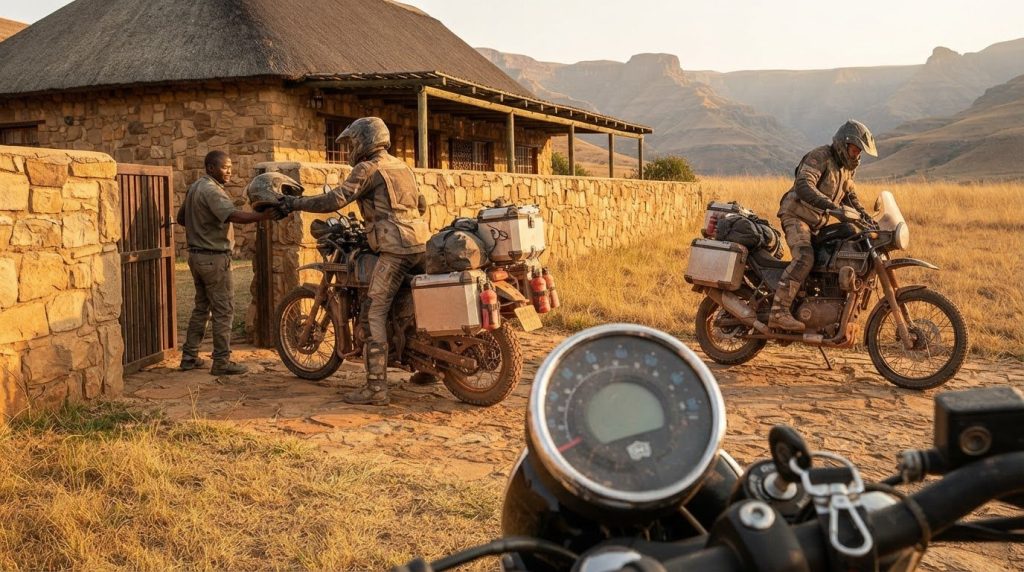
May to September is generally the best time for a South African safari. But unique safari experiences in South Africa need not end at the reserve gate: a well-planned journey can pair wildlife encounters with vineyard landscapes and the coast.
The dry winter season is a useful starting point, though the best dates depend on the regions and experiences you want. Even if safari is the main event, combining open wilderness with wine country and ocean air can make the wider itinerary more rewarding.
This guide covers when to go, how to choose a region and plan a practical route, and what to expect from different types of accommodation. You’ll also find ideas for combining safari with vineyards and coastline, with time for both untamed landscapes and slower moments along the way.
Key Takeaways
- Choose between Kruger’s public roads and neighbouring private reserves, where guided drives offer a different way to experience wildlife.
- Match your region and route to the season and the experiences you want, rather than trying to fit too many stops into one trip.
- Weigh the privacy and comfort of a lodge against the flexibility of camping, then plan travel time around your chosen safari area.
- Build a richer itinerary by pairing wildlife days with South Africa’s vineyard landscapes and coastline.
1. When is the best time to visit South Africa?
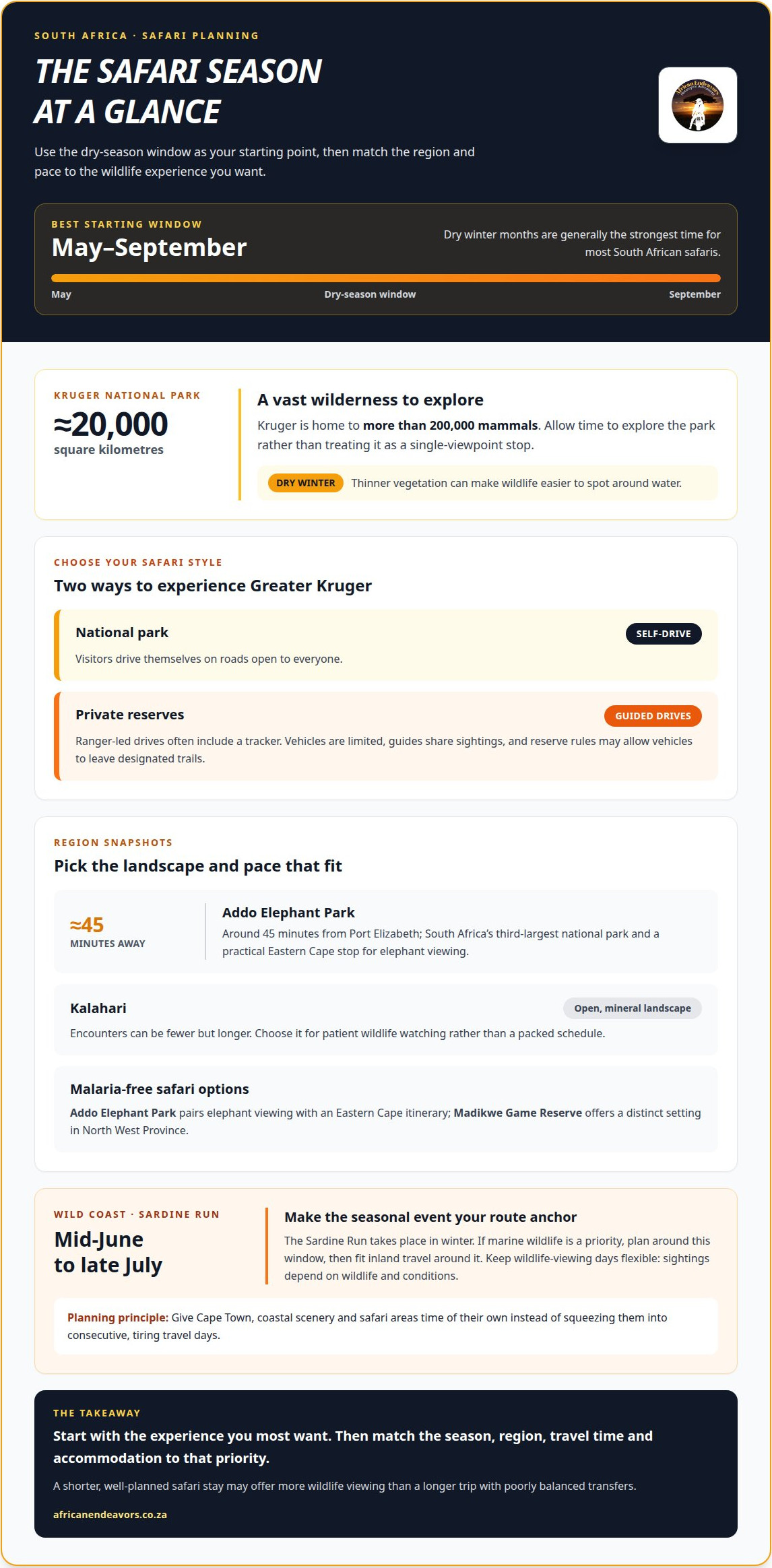
For most South African safaris, the dry winter months from May to September offer the strongest starting point. In Kruger National Park, thinner vegetation can make wildlife easier to spot around water, while cooler conditions shape the daily rhythm of game drives. Kruger covers around 20,000 square kilometres and is home to more than 200,000 mammals, so allow time to explore rather than treating it as a single-viewpoint destination.
Greater Kruger adds another dimension. Wildlife moves freely between Kruger and adjacent protected reserves, but the experience varies by area. In the national park, visitors drive themselves on roads open to everyone. In private reserves, ranger-led drives often include a tracker, vehicles are limited, and guides share sightings. Reserve rules may also allow vehicles to leave designated trails to follow wildlife activity.
For accessible elephant viewing, consider Addo Elephant Park, around 45 minutes from Port Elizabeth. It is South Africa’s third-largest national park, making it a practical Eastern Cape stop. The Kalahari offers a more open, mineral landscape, where encounters can be fewer but longer; choose it for patient wildlife watching rather than a packed schedule.
Walking, horseback and cycling safaris follow the rules of the specific reserve and activity. Stay with your guide, follow the safety briefing, keep the group together and never approach wildlife independently. These precautions matter on foot, in the saddle and on a bicycle.
For malaria-free safari destinations in South Africa, consider Addo Elephant Park and Madikwe Game Reserve. Addo pairs elephant viewing with an Eastern Cape itinerary, while Madikwe offers a distinct setting in North West Province.
Use the May-to-September dry-season window as a broad guide, then choose a region to match your preferred landscape and pace. In Kruger, the season, reserve and style of game drive all shape the experience. Build your itinerary around the encounters and level of comfort you value most.
2. Choosing a region, season and itinerary with a travel specialist
Start with the experience you most want, then choose a region to match. Kruger suits a wildlife-led route, while the Garden Route can combine coastline and vineyard country. A travel specialist can bring places, season and transport together, giving your itinerary a clear focus instead of a rush of disconnected stops.
Season matters beyond game viewing. On the Wild Coast, the Sardine Run takes place in winter, with expeditions running from mid-June to late July. If marine wildlife is a priority, make that seasonal window your anchor, then fit inland travel around it. Cape Town, coastal scenery and safari areas each deserve time, rather than being squeezed into consecutive, tiring travel days.
Shape the route around your available days, preferred pace and desired level of comfort. A shorter, well-planned safari stay may offer more wildlife viewing than a longer trip with poorly balanced transfers. Guided travel can also connect distant regions and coordinate transitions between accommodation, wildlife activities and scenic stops.
For seasonal dolphin and whale watching, make the coast a distinct itinerary priority. Choose coastal destinations for their marine experiences, then decide whether to add Cape Town, vineyards or an inland reserve. Sightings depend on wildlife and conditions, so keep the day flexible instead of building every stop around a single encounter.
Safari costs in South Africa depend mainly on location and exclusivity, with season also playing a part. Accommodation, transport and included experiences shape the budget. Compare what each itinerary covers, then weigh those details against the route and travel style you want.
A specialist can turn those choices into a coherent journey across the country. For riders drawn to a guided, off-road way of exploring, consider guided adventure routes as one possible part of the wider itinerary.
3. What type of accommodation can I expect?
South African safari stays range from campsites to private lodges, with comfort shaped by location, facilities and guiding. In Kruger National Park, self-drive visitors use public roads and choose accommodation to suit their route. Private reserves offer a different rhythm, with ranger-led game drives and lodges where guests may watch wildlife from their own space.
Luxury lodges prioritise privacy and a close connection to the reserve. Some have viewing areas where animals may pass nearby, letting guests watch wildlife between drives. Mid-range stays provide a comfortable base for early departures and late returns, while simpler camps suit travellers who value practical access over lodge-style amenities. Compare what each stay includes, such as meals, guided activities and transport, before choosing.
Plan around the safari day. Drives typically begin at dawn, pause at the lodge around midday, then resume in the late afternoon and continue into the night. Distance matters: staying near the area you want to explore can reduce unnecessary transfers and leave more time for the reserve.
Which South African reserves offer night drives or off-road safaris? Consider private reserves around Kruger. Guided drives are led by a ranger and often include a tracker, and vehicles may leave designated trails when reserve rules allow. National park visitors drive themselves on roads open to everyone, so the experience differs from private-reserve activities.
Beyond Kruger, match accommodation to your wider route. A Garden Route stay brings coastal scenery into the journey, while safari lodges suit trips centred on wildlife. The season also shapes the experience, from cooler early drives in winter to different conditions in other months.
For a practical choice, map each night’s accommodation against the next day’s destination, then balance comfort with travel time. A lodge inside or near a reserve supports early drives; a town stay may work better when your itinerary moves between regions. Across South Africa, plan around the distances between reserves, coastal stops and the activities you most want to enjoy.
4. Combining a safari with South Africa’s vineyards and coastline
Give each landscape its own chapter. Kruger National Park brings wildlife viewing and game drives; the Cape Winelands offers vineyard scenery, while the coast changes the pace. Instead of moving every night, build your itinerary around a few meaningful bases, with time to enjoy each place beyond the transfer.
For a Cape-led route, pair Cape Town with the Winelands, then continue towards the Garden Route. This sequence links city, vineyard and coastal settings without treating them as interchangeable stops. Allow dedicated time for tastings and meals in the vineyard region, then shift attention to ocean views, coastal walks and the distinct wildlife encounters available along the way.
A Kruger safari can also anchor a broader journey. Keep the reserve experience separate from the scenic leg, so early game drives don’t compete with long onward travel. The Panorama Route offers a change of scenery after the bush; a coastal extension works best with its own arrival time and unhurried days. Include travel breaks instead of scheduling wildlife activities immediately after a transfer.
Choose the order according to season and priority. If wildlife is the main event, place the safari first and let vineyard or coast days provide a gentler finish. If a particular coastal experience sets your dates, make it the fixed point, then fit the reserve and wine country around it. South Africa’s regions offer different combinations, so you needn’t cover every attraction. Keep the route focused on the regions you most want to experience.
The clearest takeaway: select one safari region, one vineyard area and one coastal stretch, then connect them at a manageable pace. For a guided, road-led way to experience South Africa’s varied landscapes, plan your South African adventure.
African Endeavors: The Wild Coast & Drakensberg Tour
The Wild Coast & Drakensberg Tour offers a guided motorcycle journey through two of South Africa’s striking regions. It suits travellers who want open-road adventure alongside coastal and mountain landscapes, rather than a trip focused solely on wildlife viewing from a lodge.
For a route centred on Kruger and dramatic inland scenery, The Kruger Park & Panorama Route Tour is another option. The Garden Route & Route 62 Tour connects a different mix of South African landscapes, while Off-Road Dirt Bike Safaris are suited to riders seeking off-road terrain. Each offering brings a distinct road-based perspective to a wider South African itinerary.
If a guided motorcycle journey fits the adventure you have in mind, contact African Endeavors to discuss your route.
Shape the journey around the way you want to travel
Before choosing your next route, decide how you want the journey to feel. Do you picture quiet time among wildlife, or the changing terrain and open-road freedom of a guided motorcycle tour? Your answer can help set the pace, show which experiences deserve more time and shape a trip that feels personal rather than overfilled.
For riders drawn to a scenic touring route, The Garden Route & Route 62 Tour offers a way to experience South African landscapes from the road. African Endeavors’ guided tours provide a distinct approach to exploring the country, complementing a wider travel plan without suggesting that every stop must fit into one itinerary.
Make your next step simple: choose the kind of adventure that matters most, then explore the route that suits it. For ideas on planning unique safari experiences in South Africa alongside a guided touring journey, plan with African Endeavors. Your South African adventure can begin with one clear choice.
Frequently Asked Questions
When is the best time to visit South Africa?
For a classic South African safari, the dry winter period from May to September is a useful starting point. If your plans focus on the Kgalagadi, March to May is another seasonal window to consider. Choose dates around your main destination and priorities, then allow the route to accommodate each region’s conditions and experiences.
How is the wildlife viewing?
Wildlife viewing varies across the country and even between areas of the same reserve. In private reserves adjoining Kruger, guided vehicles share sightings, while visitors in the national park explore on public roads. Give animals time and attention instead of treating each encounter as a photo opportunity. Patient observation can reveal behaviour a quick stop might miss.
What type of accommodation can I expect?
Options range from campsites and tented camps to lodges, with varying levels of privacy and service. Some South African lodges let guests watch wildlife from their own space, while camping offers a more independent base. Before choosing, compare location, comfort, meals, and whether activities or transport are included in your stay.
What are the most unique safari experiences in South Africa?
Distinctive options include guided game drives in private reserves, elephant viewing at Addo, and combining a wildlife journey with the coast or vineyards. Travellers seeking an active, road-based adventure can also consider guided motorcycle journeys, including Off-Road Dirt Bike Safaris. The best fit depends on whether you want wildlife encounters, varied scenery or a more physically immersive trip.
How much do unique South African safari experiences cost?
Costs vary with the region, exclusivity, accommodation and travel arrangements; season can also affect the total. For a guided motorcycle tour with African Endeavors, pricing depends on the itinerary and associated arrangements, and is provided after a quote request. For other safari stays, compare what the accommodation and activities cover, rather than judging options by a headline rate alone.
When is the best time of year for different safari experiences in South Africa?
May to September suits many South African safari plans, while the Kgalagadi’s dry season is March to May. For the Sardine Run off the Wild Coast, winter expeditions run from mid-June to late July. Build your dates around the experience that matters most, then let the rest of your itinerary follow that seasonal anchor.
