
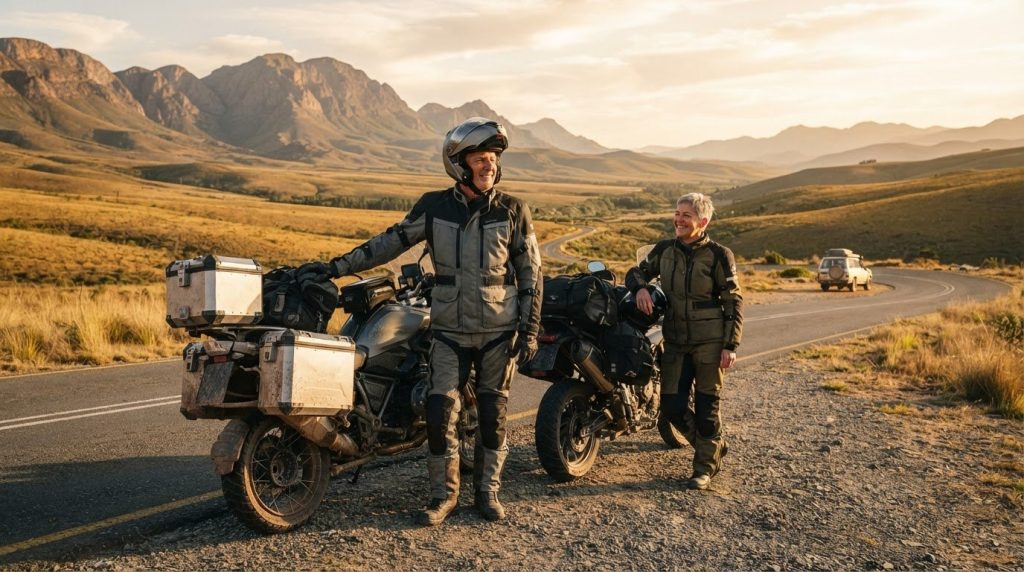
What if retirement isn’t a reason to ride less, but a chance to make every mile count? Motorcycle touring in retirement can bring open roads, changing landscapes and the pleasure of travelling at your own pace. It’s natural, though, to wonder how your stamina, confidence or time away from the saddle might shape the experience.
Those concerns belong in the plan, not on the sidelines. A rewarding tour isn’t measured by how far you ride each day. Thoughtful pacing, proper rest and the right level of support can make the journey more comfortable and manageable. African Endeavors’ guided tours include motorcycle hire, fuel, accommodation and professional guides. A support vehicle carries luggage and provides mechanical assistance.
This guide will help you consider whether touring suits your circumstances, balance challenge with comfort, and decide how much independence or practical support feels right. We’ll cover the questions to weigh before choosing an itinerary, from your recent riding and preferred daily pace to rest time and tour style, so you can prepare for an adventure that feels exciting and well judged.
Key Takeaways
- Motorcycle touring in retirement can be shaped around your interests, experience and preferred pace, rather than assumptions about age.
- Review your recent riding, comfort needs and tolerance for a full day in the saddle before settling on an itinerary.
- Compare guided and independent travel by considering how much route planning, luggage handling and logistical responsibility you want.
- Decide whether scenery, riding challenge, comfort, social connection or simpler logistics matters most, then use those priorities to guide your preparations.
- Explore the differences between adventure bike, Harley Davidson and off-road tours to find a style that fits the ride you have in mind.
Motorcycle touring in retirement: why this can be the right time to ride
Retirement can open up more freedom to choose when to travel, what to see and how long to stay. But the idea of riding through South African scenery also brings practical questions. How much riding feels comfortable? Do you want a demanding route, or time to take in the views? These aren’t reasons to dismiss the idea. They’re useful starting points for planning a trip that fits.
Motorcycle touring in retirement is travel shaped around your interests, experience, pace and comfort, rather than a fixed idea of what an adventure should look like. Retirement itself creates no age-based measure of readiness. Your riding history, current confidence, personal circumstances and preferred kind of journey matter more than a number.
A bucket-list ride is an ambition; a well-planned tour is that ambition shaped around your needs. This leaves room for adventure without asking you to follow someone else’s version of it. A shorter route or gentler pace can still make for a memorable journey.
What makes a motorcycle tour appealing after retirement?
There’s a particular immediacy to riding: the open air, changing light and shifting landscape are part of the journey, not a view framed by a window. You can pause to take in a scene, share the road with people who enjoy motorcycling and give the trip a purpose beyond simply reaching the next stop. Motorcycle touring covers a range of ways to travel by bike, but the right choice depends on what you want from the experience.
For some riders, the draw is a scenic road and unhurried exploration. Others enjoy the challenge of a more adventurous route or the company of a group. There’s no need to make the journey as long or strenuous as possible for it to feel significant.
There is no single retirement rider profile
An experienced rider may be ready to plan a longer route, while someone returning after time away may prefer to rebuild confidence gradually. A newer touring rider can also enjoy a meaningful first trip without committing to a major expedition. Age alone doesn’t tell you how comfortable or confident you’ll feel on a bike.
Start with your own riding history: what have you ridden recently, what feels enjoyable now, and what would you like to try? Let your answers shape the ambition. A relaxed itinerary can offer the pleasure of discovery without making distance the measure of success.
Assess your riding confidence, comfort, and ideal touring pace
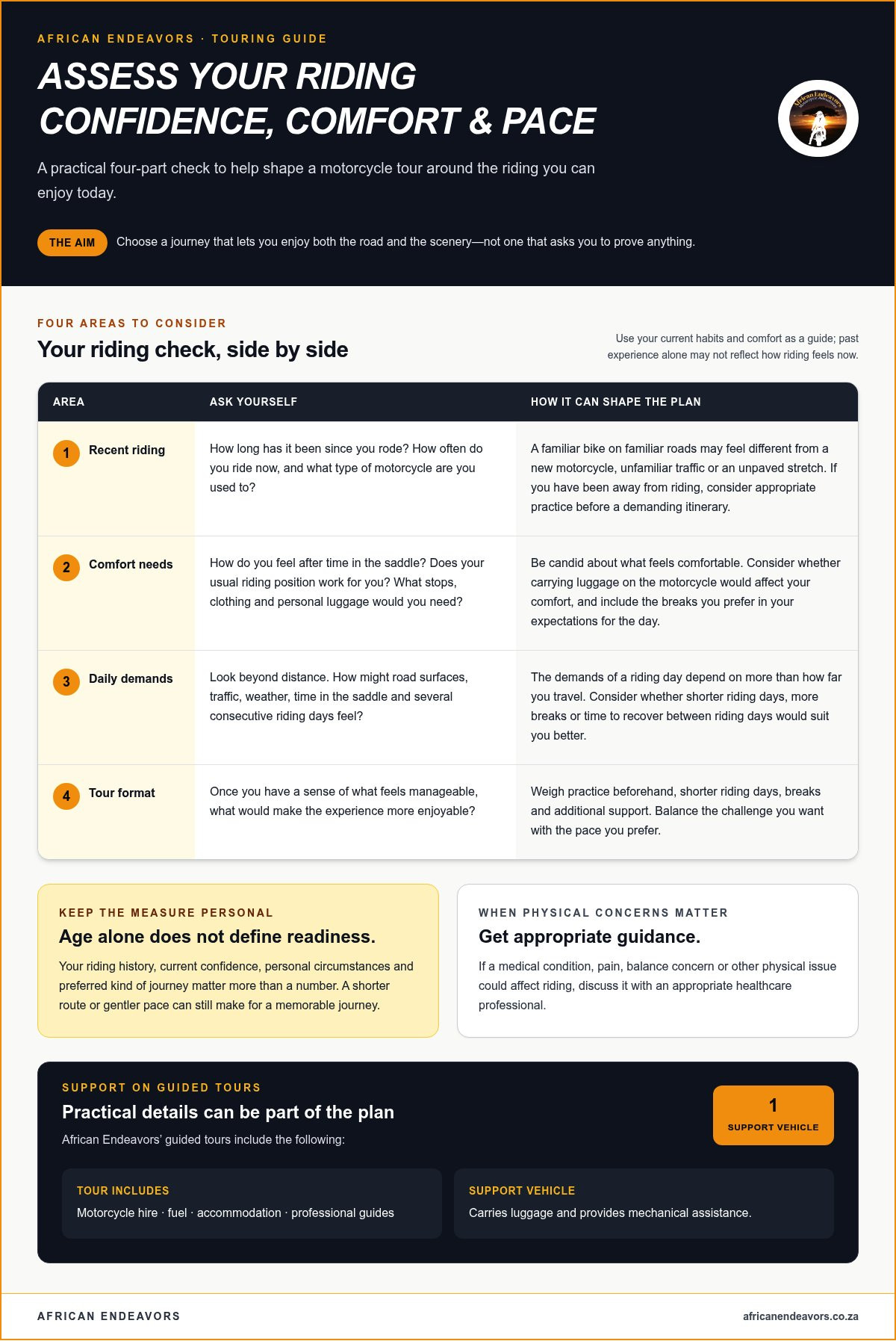
A memorable route begins with an honest picture of the riding you can enjoy today. For motorcycle touring in retirement, assess your current habits and comfort rather than relying on past experience or assumptions about age. A rider who used to cover long distances may need time to regain confidence; another may feel entirely at ease. The aim isn’t to prove anything. It’s to choose a journey that lets you enjoy both the road and the scenery.
- Review your recent riding. How long has it been since you rode, how often do you ride now, and what type of motorcycle are you used to? A familiar bike on familiar roads may feel very different from a new motorcycle, unfamiliar traffic or an unpaved stretch.
- Identify comfort needs. Consider how you feel after time in the saddle, whether your usual riding position works for you, and how you’d manage clothing, stops and personal luggage. Be candid: comfort is useful planning information, not a weakness.
- Think through the daily demands. Look beyond distance alone. Road surfaces, traffic, weather, time in the saddle and the effort of several consecutive riding days can all affect how a day feels.
- Choose a suitable format. Once you know what feels manageable, consider whether practice beforehand, shorter riding days, breaks or additional support would make the experience more enjoyable.
How to judge whether your riding experience feels current
Think about your most recent rides, not only your most ambitious ones. If you’ve been away from riding or haven’t ridden the type of motorcycle you’re considering, build confidence through appropriate practice before committing to a demanding itinerary. A destination may be deeply appealing, but enthusiasm for the landscape and readiness for its riding demands are separate questions. Use both to shape your decision.
Choose a pace that leaves room to enjoy the journey
Some riders relish a full day on the road; others prefer shorter stretches, frequent breaks or time to recover between riding days. Consider how long you want to spend away from home, what you’ll need to carry and whether managing luggage on the motorcycle would affect your comfort. The right itinerary balances the challenge you want with the pace you prefer.
Stamina and comfort vary from person to person; age alone can’t tell you what will suit you. If a medical condition, pain, balance concern or other physical issue could affect riding, discuss it with an appropriate healthcare professional rather than relying on an article to assess your readiness. For a general safety refresher, the Motorcycle Safety Tips from NHTSA offer practical points for motorcyclists, including protective gear and visibility.
Once you have a realistic sense of your pace and riding style, compare ways to structure the trip. Riders who value guidance and practical support can consider guided motorcycle safari tours.
Guided or independent motorcycle touring: which suits retirement?
Choosing between independent and guided travel is less about finding a universally better option and more about deciding where you want to spend your attention. Would you enjoy shaping the route and handling the arrangements, or would you rather focus on the ride while a professional guide and coordinated logistics support the journey? For motorcycle touring in retirement, the right balance depends on your experience, preferred level of self-direction and appetite for trip planning.
| Consideration | Independent touring | Guided touring |
|---|---|---|
| Planning responsibility | You organise the route, accommodation and day-to-day arrangements. | Professional guides and coordinated tour arrangements reduce the planning you handle yourself. |
| Route structure | You choose where to go and can adjust plans yourself as the trip unfolds. | A guide leads the journey; private groups can have itineraries tailored to their needs. |
| Luggage | You decide what to carry and how to manage it on the trip. | A support vehicle carries luggage. |
| Tour support | You take responsibility for managing practical issues as they arise. | A support vehicle provides mechanical assistance, alongside professional guide services. |
What independent touring asks you to organise
Independent travel can suit riders who value self-direction and are comfortable managing the details. You’ll make decisions about routes, accommodation, luggage and the rhythm of each day, from when to set off to where to pause or stay overnight. For some, that freedom is part of the pleasure. For others, researching and coordinating each element can take attention away from the riding itself.
Ask yourself whether managing those arrangements adds to the adventure or feels like a second job. Neither answer is a judgement on your ability or suitability; it simply helps you choose a format that matches what you want from the trip.
What a professionally guided tour can take off your plate
A guided tour brings structure and practical support. African Endeavors’ multi-day packages include motorcycle hire, fuel, accommodation and professional guide services. A support vehicle carries luggage and provides mechanical assistance throughout the tour. That reduces the planning and packing you need to handle, leaving you more time to focus on the ride and the landscapes around you.
Guidance doesn’t mean every rider needs the same itinerary. Private groups can have their routes tailored, and adventure bike, Harley Davidson and off-road tours offer distinct riding styles. Consider the kind of riding you enjoy rather than assuming one format suits everyone. Riders drawn to scenic cruiser touring can read the guided Harley Davidson tour overview when weighing how much structure and support they’d like.
Use the comparison as a practical prompt: which tasks would you happily manage, and which would you rather leave to a guided package? Your answer can help you choose a journey that feels adventurous without making the logistics the main event.
Plan a retirement motorcycle tour around your real priorities
A good plan starts with what you want the journey to feel like, not with a map full of ambitious distances. Perhaps you picture long scenic stretches, a new riding challenge, time with fellow enthusiasts or fewer arrangements to manage yourself. Name your priorities first, then use them to guide your motorcycle style, itinerary and level of support. That way, the details serve the adventure rather than dictate it.
- Choose your leading priorities. Decide what matters most: scenery, riding challenge, comfort, social connection or reduced logistics. You can value several, but identifying your top priorities helps you make sensible trade-offs.
- Match the motorcycle and tour style to your goals. An adventure bike may appeal if varied terrain and an exploratory feel are part of the draw. Harley Davidson touring offers a different character, with scenic cruising at its heart, whilst off-road touring is geared towards riders seeking a dirt-bike experience. These are broad distinctions, not guarantees that one style will suit every rider. Consider what you’ve enjoyed riding and what feels comfortable now.
- Shape the itinerary around your preferred rhythm. Think about the balance between riding and time to pause, the kind of roads you want to experience, and how much structure suits you. A private group can have its itinerary tailored to its needs, helping align the journey with shared interests and priorities.
- Decide how much support you want. Consider whether you’d rather organise the route and arrangements yourself or have professional guidance and coordinated logistics. Be clear about what would make the trip easier to enjoy, from help with luggage to support with mechanical issues.
- Prepare the practical details. Review travel arrangements, documentation and personal requirements well ahead of departure. Requirements can depend on your circumstances and journey, so consult relevant official sources for current information rather than relying on assumptions. Allow time to consider your comfort needs and discuss realistic pacing as the itinerary takes shape.
Match the motorcycle and tour style to your goals
The motorcycle is part of the experience, but it shouldn’t be chosen for its image alone. Think about the riding position and style you prefer, the terrain you’re keen to explore, and how confident you feel on that type of bike. If you want the route and arrangements shaped around your group’s interests, the bespoke motorcycle safari guide explains how a private itinerary can be tailored.
Prepare for the practical details before departure
Set aside time to review the paperwork and travel arrangements relevant to your plans, and note any personal requirements that could affect your comfort on the road. Keep preparation focused on the questions that influence your decisions: how long you want to ride each day, what you’d prefer not to carry on the motorcycle, and how much flexibility you want in the schedule.
Thoughtful planning turns motorcycle touring in retirement from a broad ambition into a trip with a clear shape and purpose. If a guided adventure with a tailored itinerary fits your priorities, explore African Endeavors’ motorcycle safari options.
Make your next chapter a supported motorcycle safari with African Endeavors
A rewarding tour brings together the elements considered throughout this guide: your current riding confidence, the pace you’d enjoy, the motorcycle style that appeals to you and how much support you want along the way. A multi-day guided safari can suit riders who want to experience a South African motorcycle journey without arranging every practical detail themselves. The value lies in finding a trip that matches your priorities.
What the guided package is designed to simplify
African Endeavors’ guided multi-day safari packages include motorcycle hire, fuel, accommodation and professional guide services. Having these elements included reduces the need to arrange them separately and leaves fewer trip logistics for you to coordinate. This can appeal if you’d rather concentrate on the riding and landscapes than manage each booking and travel detail yourself.
A support vehicle carries luggage and provides mechanical assistance throughout the tour. You don’t need to manage all your luggage on the motorcycle, and mechanical assistance is part of the tour’s support. Professional guides lead the experience. These practical features can help organise a trip, but they don’t replace choosing an itinerary and riding style that feel right for you.
Consider what you’d value most: a guided route, less luggage to carry, help with mechanical issues or the pleasure of travelling with a group. If you welcome expert guidance and coordinated arrangements, a supported safari can fit those priorities.
Take the next step towards a considered trip
Before choosing, revisit your priorities. Are you drawn to scenic cruising on a Harley Davidson, an adventure-bike journey or an off-road dirt-bike experience? Think about your recent riding, the pace you’d enjoy and the level of structure that would let you focus on the journey. African Endeavors offers these different riding styles, and private groups can have itineraries tailored to their needs.
There’s no need to treat the decision as a test of endurance or ambition. A considered choice can bring adventure, comfort and enjoyment together by matching the trip to the rider, rather than expecting the rider to fit a fixed idea of touring. Learn more about guided motorcycle safaris with African Endeavors.
Let your next ride take shape
The road ahead doesn’t need to be mapped in every detail before you begin. Start with one clear question: what would make this journey feel right for you? Your answer can guide the kind of ride you choose, the pace you prefer and the memories you hope to bring home. That’s the heart of motorcycle touring in retirement: making space for a meaningful adventure on your own terms.
Give yourself permission to plan thoughtfully. A considered choice isn’t a smaller ambition; it’s a way to make room for both the thrill of discovery and the comfort that helps you enjoy it. Whether you’re drawn to sweeping scenery, a new riding challenge or the ease of a guided experience, your next chapter can begin with a practical step.
Explore guided motorcycle safaris with African Endeavors and start imagining a South African ride that feels genuinely yours. Choose a tour style and pace that suit the adventure you have in mind.
Frequently Asked Questions
Is motorcycle touring in retirement a good idea?
It can be, if the trip suits your current riding confidence, interests and circumstances. Retirement doesn’t automatically make a tour right or wrong; a rider who enjoys shorter scenic rides may choose a different itinerary from someone keen on longer days. Consider what you want from the experience, then weigh that against the riding it involves. If a health concern could affect riding, discuss it with an appropriate healthcare professional.
Can I join a motorcycle tour if I have not ridden for several years?
Time away from riding is a reason to rebuild familiarity before setting off on a demanding trip. Practise on a motorcycle and roads that feel manageable, and notice how you respond to traffic, low-speed manoeuvres and a longer spell in the saddle. If you’re unsure, a refresher course with a qualified instructor may help you decide whether your confidence feels ready for touring.
How much riding should I expect on a multi-day motorcycle tour?
There isn’t one daily distance that applies to every tour. Riding time depends on the route, road conditions, stops and the itinerary’s overall design. Before committing, review the day-by-day plan and consider not only kilometres but also how long you may be seated, likely breaks and the pattern of consecutive riding days. A route with fewer kilometres can still feel demanding if conditions require sustained concentration.
What happens if I find a planned riding day more demanding than expected?
Tell your guide as early as you can, rather than waiting until discomfort or fatigue builds. A guided tour gives you a professional to speak with about how the day is going, though changes to the route or schedule shouldn’t be assumed. Before departure, think through what you’d do if you needed to pause or stop riding, and make sure you understand the tour’s arrangements for handling that situation.
Do guided motorcycle tours in South Africa include a support vehicle?
African Endeavors’ guided safari packages include a support vehicle that carries luggage and provides mechanical assistance. You can plan what to take without carrying all your trip luggage on the motorcycle. The vehicle’s stated role is practical support, not a promise of medical care or a particular response in every circumstance. Consider how this arrangement fits your preferences and touring plans.
Is a guided motorcycle tour better than travelling independently in retirement?
Neither format is automatically better. Independent travel can suit riders who enjoy making their own route and accommodation decisions; a guided tour may appeal if you’d rather have a professional guide and coordinated arrangements. Think about where you want to focus your attention during the trip. If planning each detail is part of the pleasure, independence may appeal; if it feels like extra work, guided travel could be a better fit.
What should I consider before choosing a motorcycle tour in retirement?
Look beyond the destination name. Consider whether you’re comfortable with the motorcycle style and road conditions, how many consecutive days you’ll ride, and whether the group format suits you. Check the itinerary and travel arrangements against your commitments, and review current documentation and riding requirements through relevant official sources. If you’re travelling with someone else, discuss what each of you hopes to experience before choosing a route together.
