
The biggest adventure bike in the showroom may be the wrong choice for your next South African ride. A journey can shift from smooth tar to loose gravel and rough tracks, so the best adventure bikes for South African terrain aren’t defined by engine size or a leaderboard alone. Look beyond the brochure: weight, riding position and how confidently you can manage the bike all matter when the surface changes beneath you.
Start with the ride you want. Are you planning long-distance touring with occasional dirt, or do you want to spend more time exploring off-road? This guide compares lightweight, middleweight and heavyweight adventure bikes, helping you identify the qualities that suit your preferred surfaces, experience and travel priorities.
Fit and setup also shape control. Suspension tuning and gearing can be selected to suit rider size and terrain. If you’d rather explore South Africa’s varied landscapes with expert support, guided Adventure Bike Tours pair high-performance bikes with professional guidance on mixed on-road and off-road routes. Choose for the journey, then let the horizon open up.
Key Takeaways
- Match your bike to the surfaces you ride most often, rather than occasional off-road ambitions.
- Compare weight, suspension, wheels and tyres, and check the specifications of individual models.
- Consider comfort and luggage capacity in light of your journey, not as proof of off-road ability.
- Compare lightweight, middleweight and heavyweight categories against your fit, confidence and touring priorities to narrow down the best adventure bikes for South African terrain.
- Discover how a guided, fully supported Adventure Bike Tour can bring mixed on-road and off-road riding within reach.
What makes an adventure bike suited to South African terrain?
An adventure bike balances road travel with the ability to handle less-developed surfaces. That balance matters in South Africa, where a ride may move from tar to gravel and then continue over rough tracks, sometimes within the same journey. But “adventure bike” describes a broad category, not a promise that every model is equally comfortable off-road. Some designs favour long stretches on paved roads; others place more emphasis on riding beyond them.
Think about the sequence of surfaces you expect to ride, not just the route label. Gravel can be firm and smooth or loose and uneven. Rough tracks may bring repeated bumps, soft patches or rocky sections. These conditions affect how much effort the bike demands and how confidently you can control it. The best adventure bikes for South African terrain are not a universal shortlist. They are the bikes that suit the conditions you actually expect to ride.
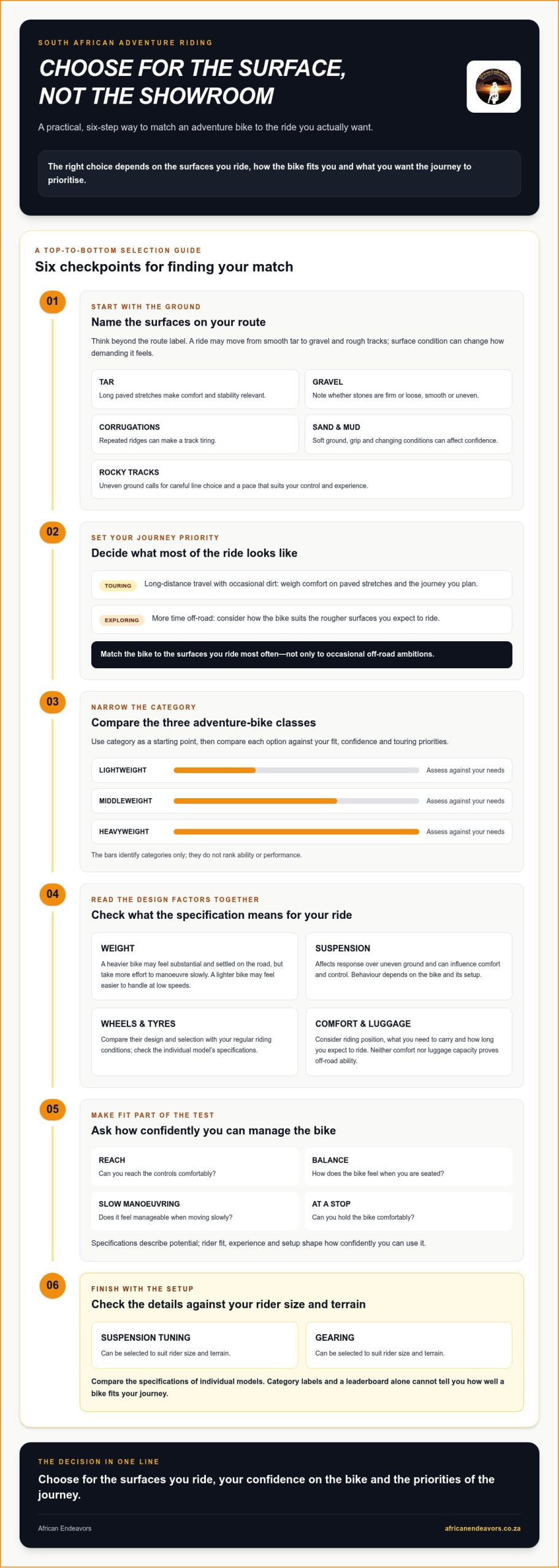
The best choice depends on the surfaces you ride, how the bike fits you and what you want the journey to prioritise.
Which South African surfaces should riders consider?
Look beyond the word “gravel”. Consider the surface itself and how it changes:
- Tar: Smooth paved roads make comfort and stability relevant over longer stretches.
- Gravel: Firm or loose stones can feel very different under the tyres, so note the surface condition, not just its name.
- Corrugations: Repeated ridges can make a track tiring and call for a composed riding approach.
- Sand: Soft ground can feel less predictable than a firm surface and may test your confidence.
- Mud: Grip and conditions can vary, making a familiar route feel different after rain.
- Rocky tracks: Uneven ground calls for careful line choice and a pace that suits your control and experience.
There’s no universal ranking from easiest to hardest. Surface condition, weather, pace and experience all shape the challenge. A rider comfortable on firm gravel may feel less assured on loose sand, while another may prefer a steady rocky track to a slippery muddy section. Be honest about what you ride often, not only what you hope to tackle one day.
Does one adventure bike suit every kind of ride?
Choosing usually involves a balance. A bike oriented towards road travel may suit long paved stretches and everyday comfort, whilst a more off-road-focused design may better match frequent riding on rougher surfaces. These are broad tendencies, not guarantees. Models within the same category can differ, and individual fit affects how manageable a bike feels.
That’s why a model ranking may not answer your question. A highly rated touring choice could be less appropriate if your regular journeys include soft or uneven ground. A bike praised for off-road focus may not suit you if long road days are the priority. This guide compares categories and selection factors rather than declaring one definitive winner. Start with your usual surfaces, then weigh them against your confidence and the kind of journey you want to take.
How bike design and setup affect mixed-surface riding
A specification sheet can tell you what a bike is designed to do, but it can’t tell you how confidently you’ll manage it on a loose, uneven surface. A bike’s specification describes its potential; rider fit, experience and setup shape how confidently you can use it. That distinction matters on rides that move between tar and gravel, where the same machine may feel composed on one stretch and demanding on another.
Consider each feature in relation to your likely journey, rather than treating any single specification as a guarantee of capability:
- Weight: A heavier bike may feel substantial and settled during road travel, but can take more effort to manoeuvre slowly or regain control after a stop. A lighter bike may feel easier to handle at low speeds, though the overall experience still depends on design, fit and rider confidence.
- Suspension: Suspension affects how a bike responds over uneven ground and can influence comfort and control. Its behaviour depends on the bike and its setup, so don’t assume that one specification makes a machine right for every track.
- Wheels and tyres: Their design and selection affect how the bike suits different surfaces. Compare the intended use with your regular riding conditions, and verify current specifications rather than relying on broad category labels.
- Comfort and luggage: A comfortable riding position and room for luggage can matter on longer journeys, but neither proves off-road ability. Consider what you need to carry and how long you expect to ride before weighing these priorities.
Why weight, suspension and tyres matter
These characteristics work together, and their trade-offs become more noticeable as the surface changes. A bike that feels reassuring on tar may take more effort on a tight, uneven track. A design geared towards rougher ground may involve different compromises for extended road travel. Rather than searching for one universally superior setup, compare the bike’s intended surfaces with your experience and priorities.
How rider fit and bike setup change the experience
Fit is practical, not cosmetic. Consider your reach to the controls, your balance when seated and your confidence manoeuvring slowly. Can you hold the bike comfortably at a stop? Does its position feel manageable when you need to adjust your line? These checks help you judge whether a bike’s size and weight suit you, not simply whether its published figures look appealing.
Setup can refine the match. Suspension tuning and gearing selection can be adjusted to suit rider size and terrain, and engine characteristics can also be adjusted as part of a considered setup. African Endeavors’ Bike Setup & Preparation offers these adjustments. If you’re developing your skills, the Motorcycle Safety Institute (MSI) South Africa provides a useful reference for motorcycle safety and skills training.
The best adventure bikes for South African terrain are not chosen by specifications alone. African Endeavors’ guided Adventure Bike Tours use high-performance bikes on mixed on-road and off-road routes, with professional guidance and full support. Explore the guided tours if you want to experience varied terrain with local expertise.
Lightweight, middleweight or heavyweight: which category fits?
Weight classes offer a useful starting point, not a verdict. A lighter machine may feel less demanding to manage on a slow, uneven stretch, while a larger bike may appeal to riders who prioritise road distance and a substantial touring feel. The right balance depends on how often you ride each surface, your physical fit and what you want the journey to deliver. Category descriptions are broad tendencies, not guarantees about individual bikes.
Use this comparison to decide which group deserves a closer look. Individual models differ, so check current specifications and assess how the bike suits you rather than relying on its category label alone.
| Category | Relative manageability | Road comfort | Off-road focus | Touring priorities |
|---|---|---|---|---|
| Lightweight | May feel easier to manoeuvre slowly, depending on fit and design | Can suit shorter or more mixed journeys, though models vary | May appeal to riders prioritising slower, uneven surfaces | Consider comfort and luggage needs for longer trips |
| Middleweight | Can offer a balance, but size and feel vary between models | May suit a blend of road travel and dirt riding | Capability depends on the individual bike and its setup | Worth investigating for varied journeys and mixed priorities |
| Heavyweight | May require more effort at low speeds or when manoeuvring | May appeal to riders seeking a substantial road-touring feel | Greater size does not automatically mean greater suitability for rough ground | Consider how road comfort, luggage and bike manageability balance |
When a lightweight adventure bike may make sense
If your regular riding includes slow, uneven sections, a more manageable feel may help you concentrate on your line and build confidence. Weigh that against the whole journey: how much road distance will you cover, how important is all-day comfort, and what do you need to carry? A lighter category isn’t automatically the best fit if your priorities lean towards extended road travel or touring comfort.
When a middleweight or heavyweight bike may suit
Riders planning longer road stretches may value the substantial feel or touring orientation associated with larger categories. A middleweight can be worth investigating if you want to balance road travel with off-road ambitions, but there is no universal formula. For context on how design choices influence riding, see TFX Suspension’s How Bike Design Affects Performance. Compare verified specifications against your reach, balance and intended surfaces. Size alone doesn’t establish off-road suitability.
Start with your frequent conditions, not your occasional ambition. If slower, rougher surfaces dominate and manageability matters most, investigate lightweight options. If road distance and touring comfort lead, compare middleweight and heavyweight choices against your fit and confidence. Which category feels like the right place to begin?
How to choose the right adventure bike for your riding
Choose based on the riding you actually do, then check whether the bike can take you towards the journeys you’re planning. A clear process helps separate everyday needs from occasional ambitions and turns a long specification sheet into practical questions about terrain, comfort, fit and confidence.
Start with your typical surfaces and journey
Describe a usual ride in plain terms: how much is tar, how much is gravel, and how often do rougher tracks feature? Keep a special multi-day tour in view, but don’t let a rare trip outweigh the conditions you face regularly. Decide what matters most: easy handling, road comfort, off-road focus or a considered balance of all three.
Assess fit before settling on a model
Engine capacity alone won’t tell you whether a bike feels manageable. Consider your size, reach to the controls and confidence holding or manoeuvring the bike at low speed. If possible, test-ride the options you’re considering and notice how natural your position feels. Compare verified specifications, including weight and equipment, rather than relying on category labels or marketing claims.
Work through the decision in order:
- Describe your surfaces. Note the balance of tar, gravel and rougher tracks you ride most often, including whether conditions tend to be firm, loose or uneven.
- Set journey priorities. Decide how much road distance, comfort and luggage your typical ride involves. Treat a planned touring adventure as a separate priority if it differs from daily riding.
- Assess fit. Think about reach, balance and how confidently you can manage the bike while seated and moving slowly. A comfortable fit can make the difference between feeling in control and feeling overwhelmed.
- Compare categories. Use lightweight, middleweight and heavyweight as starting points, then judge individual bikes against your surfaces and priorities. No category automatically suits every rider or route.
- Verify specifications. Check current model details and compare like with like. Look beyond engine capacity to the information relevant to your intended use, and test-ride where available.
Before narrowing your shortlist, use this checklist to keep the whole journey in view:
- How much of your regular riding is on tar?
- How often do you encounter gravel or rough surfaces?
- Will you carry luggage, and how much does that matter to your plans?
- Do you feel comfortable with the bike’s size and handling at low speed?
- Are you prioritising road comfort, off-road focus or a blend?
These questions help you identify the best adventure bikes for South African terrain for your own riding, without mistaking a model ranking for a personal recommendation. If you’d like to explore varied surfaces with professional guidance, explore guided adventure bike tours on mixed on-road and off-road routes.
Experience South African terrain on a guided adventure bike tour
Comparing bikes is one way to prepare for South Africa’s varied surfaces. Riding them is another. African Endeavors’ Adventure Bike Tours are guided, fully supported journeys on mixed on-road and off-road routes, using high-performance adventure bikes with professional local guidance and tour support. That combination lets you focus on the changing road beneath you and the landscapes ahead, with the experience shaped around a guided journey.
What guided adventure touring adds
A mixed-surface itinerary brings different riding conditions into one journey. Professional guidance adds context as the route changes, while tour support accompanies the experience. It’s a way to explore with a team, take in the ride and enjoy the contrast between open roads and less-developed surfaces. If you’re weighing up the kind of trip that might suit you, the guided adventure bike safari buying guide can help you consider the guided-tour experience.
Match the journey to the riding experience you want
Before choosing a trip, picture your preferred balance. Do you want more time on paved roads, or are you drawn to routes that include off-road riding? Consider the surfaces you’re comfortable with, the ones you’d like to experience, and how you want the journey to feel. The best adventure bikes for South African terrain still depend on rider fit and priorities, while a guided tour adds professional local insight to the experience of varied terrain.
Setup matters alongside the route. African Endeavors’ Bike Setup & Preparation includes suspension tuning, engine characteristic adjustment and gearing selection to match rider size and terrain. A bike and its setup should make sense for the person riding it and the surfaces ahead.
- Consider your preferred surface mix: tar, gravel or a blend of on-road and off-road riding.
- Think about your confidence: choose a journey that fits your experience and the terrain you want to explore.
- Keep fit in view: rider comfort and setup can shape how the bike feels over a day’s riding.
For another perspective on choosing a guided ride, explore our national guided motorcycle tour insights. When you’re ready to turn the idea into a journey, satisfy your wanderlust with African Endeavors.
Choose your ride, then follow the horizon
Your shortlist is a starting point, not a decision you need to rush. The best adventure bikes for South African terrain are the ones that make the riding you genuinely want to do feel achievable and rewarding. Weigh practical needs against the journey that excites you, and let your experience, confidence and ambitions shape the choice.
Picture the ride ahead: the changing surfaces, the distance you hope to cover and the moments you want to remember. That vision can help you decide what to explore next, whether you’re refining your bike choice or seeking a professionally guided way to experience the country on two wheels. Adventure begins with a clear intention, then unfolds one stretch at a time.
Ready to turn that intention into a journey? Explore guided Adventure Bike Tours with African Endeavors and take the next step towards the open road, the gravel and the freedom beyond.
Frequently Asked Questions
Is a heavier adventure bike always better for long-distance riding?
No. A heavier bike may appeal to riders who value a substantial feel on paved stretches, but added weight can make parking, tight turns or recovering from a stop more demanding. For a long journey, consider how you’ll feel after hours in the saddle and how comfortably you can handle the bike at low speed. A short test ride may not reveal every touring trade-off, so assess the whole use case.
Can a middleweight adventure bike handle both tar and gravel?
Yes, a middleweight can suit mixed tar and gravel riding if the individual model is designed for the surfaces you plan to use. Check its current specifications, intended use and tyre fitment rather than assuming the category guarantees a particular capability. A bike that feels comfortable on firm gravel may not inspire the same confidence on a loose, uneven section. Your pace and experience matter too.
How much does rider height matter when choosing an adventure bike?
Height matters, but it isn’t the only measure of fit. Leg length, reach to the controls and your confidence balancing the bike all contribute to how manageable it feels. During a test ride, notice whether you can stop and start without feeling rushed, and whether the riding position remains comfortable. Don’t choose by seat-height figures alone; compare the bike’s fit with your build and the situations you expect to encounter.
What happens if a bike’s setup does not suit the rider or terrain?
A poor match may leave the bike feeling less comfortable or predictable for that rider and route. You might find that controlling it takes more effort than expected, or that the ride feels tiring over the surfaces you use most. Setup isn’t a substitute for suitable riding skills or a bike that fits. African Endeavors’ Bike Setup & Preparation can tailor suspension tuning, engine characteristics and gearing to rider size and terrain.
Is an adventure bike suitable for a rider new to off-road surfaces?
It can be, if the bike and first off-road rides match your ability. Start by developing control on familiar, less demanding surfaces before taking on terrain that feels intimidating. Practise at a pace that lets you stay relaxed and make deliberate decisions, and build experience gradually. A bike that feels manageable on the ground beneath you can be a more useful starting point than one chosen for ambitious specifications alone.
Can one adventure bike suit road touring and off-road riding?
Yes, but a bike intended to cover both usually involves compromises, so decide which kind of riding should feel most natural. A rider who spends most of the journey on tar may prioritise different qualities from someone who regularly rides rough tracks. The best adventure bikes for South African terrain depend on that balance, as well as fit and experience. Compare individual specifications and think about your regular routes before occasional adventures.
