
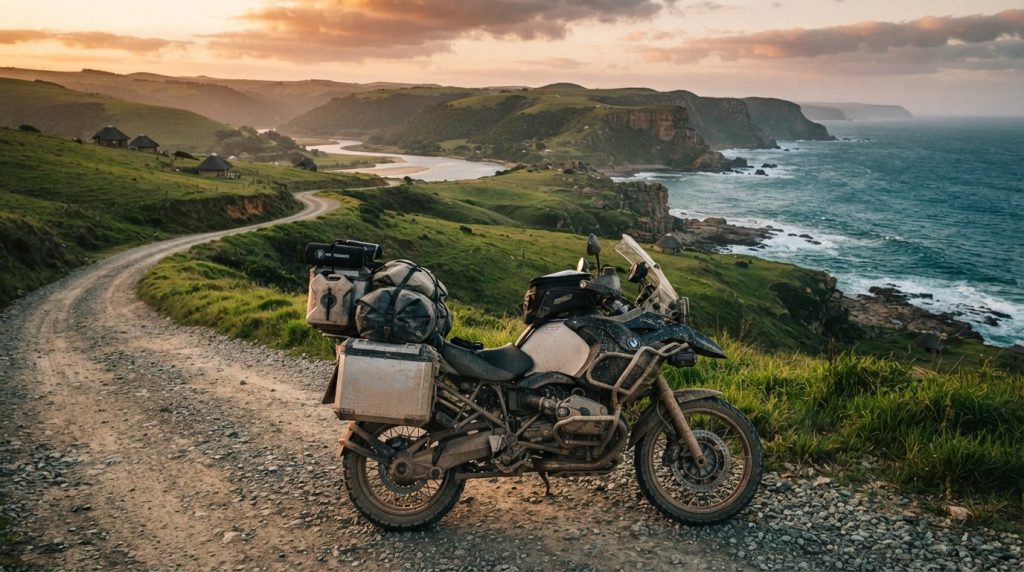
A Wild Coast motorcycle adventure itinerary should leave time to ride through KwaZulu-Natal and the Eastern Cape, with secluded Mazeppa Bay as a memorable stop. The region’s green rolling hills and scattered rondavels reward a slower pace. Plan around the riding experience, not distance alone.
The appeal is clear: open roads, ocean air and the freedom to stop when a view calls. A rewarding ride also takes practical planning, from choosing overnight stops to setting a manageable daily pace.
This guide covers route planning, accommodation, bike-hire costs and preparation for changing road conditions. It also explains how a guided South African motorcycle tour can bring the journey together, with local expertise and support along the way.
Key Takeaways
- Shape your route through KwaZulu-Natal and the Eastern Cape around worthwhile stops such as secluded Mazeppa Bay, leaving time to enjoy the Wild Coast’s rolling hills.
- Build your budget by separating accommodation, meals and motorcycle hire, then compare the practical trade-offs between organising each part and choosing a guided tour.
- Plan regular breaks and fuel stops, and adjust the day’s riding if fatigue, weather or road conditions make the schedule feel too demanding.
- Pack a toolkit, tyre repair kit and pump suited to your motorcycle, and make sure you can reach them without unpacking everything.
- Consider a guided South African motorcycle tour if you want a planned route and support while focusing on the ride.
1. Itinerary through KwaZulu-Natal and the Eastern Cape
Plan a southbound route through KwaZulu-Natal towards the Eastern Cape’s coastal roads and Wild Coast. Durban can be a starting point, with overnight stops before turning towards Coffee Bay and Mazeppa Bay. The latter is a secluded coastal stop, and the surrounding green hills and rondavels offer a quieter ride away from busy city streets.
How many days do you need for a Wild Coast motorcycle adventure? There’s no single answer: it depends on your starting point, riding pace, road conditions and time for detours. Build in room for stops and slower progress instead of planning each day around distance alone.
Include Coffee Bay and secluded Mazeppa Bay, then choose coastal stops that suit your route and the riding conditions. The Eastern Cape journey can combine ocean views with inland scenery, but coastal towns are not interchangeable. Check the route before setting each day’s destination, and treat beaches and viewpoints as planned stops rather than assuming there is direct roadside access.
Wild Coast road conditions can vary along the route. You may encounter gravel, mud or river crossings, so slow down when traction is uncertain and assess water crossings before proceeding. Do not enter water if you cannot safely judge its depth, current or road surface. Leave time for a detour or wait if conditions block your planned road.
Weather, security and wildlife also affect the ride. Pack protective clothing for changing conditions, keep valuables out of sight when parked, and plan fuel and rest stops around established towns. On a route through a private game reserve, give wildlife the right of way: slow down and leave animals space. Avoid rushing a scenic stretch to make up time.
Keep regional extensions separate from the Wild Coast route. Western Cape winelands and Oudtshoorn belong on a separate leg, with the Little Karoo offering a change from coastal scenery to drier landscapes. Cape Agulhas is another Western Cape extension, not a quick detour from Coffee Bay. Add these destinations only if your overall journey allows enough time for the extra riding.
Rhodes and the Eastern Cape highlands make a different inland chapter. Rhodes is described as South Africa’s only village without asphalt roads, so expect unsealed roads rather than a comfortable tar-road approach. Allow more time and choose a motorcycle suited to the surface. This highland leg pairs naturally with mountain scenery, but should not be squeezed into a coastal riding day.
2. Accommodation, meals, bike hire and tour pricing
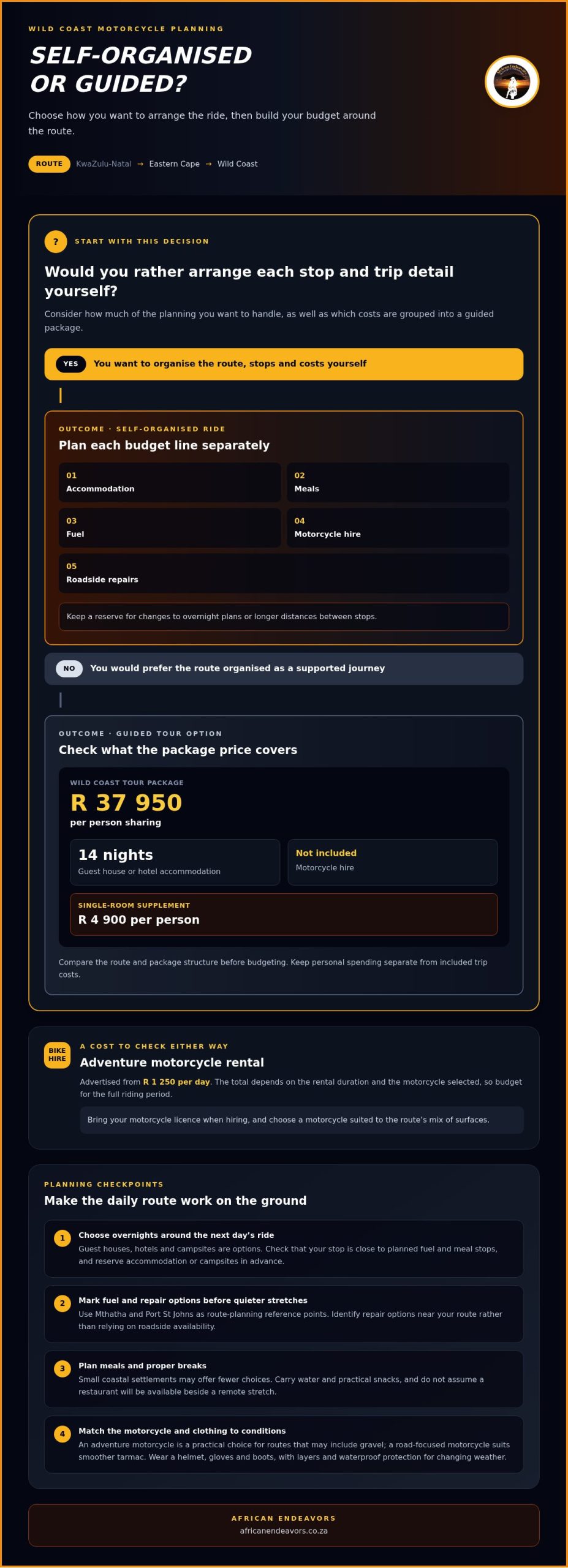
Budget separately for each part of the trip: accommodation, meals, fuel, bike hire and roadside repairs. This makes it easier to compare a self-organised ride with a guided itinerary, where the package structure determines which costs are grouped together. Keep a reserve for changes to overnight plans or longer distances between stops.
Accommodation ranges from guest houses and hotels to campsites. Along the Wild Coast, choose each overnight stop based on the following day’s route, not scenery alone. Staying in an established destination can offer a comfortable recovery after rougher riding; camping may suit riders who prefer simpler facilities and carry suitable equipment. Check that your accommodation is close to planned fuel and meal stops.
Before setting out each morning, consider where you can eat and where you expect to arrive by evening. Small coastal settlements may offer fewer choices than larger centres, so carry water and practical snacks. Plan lunch as a proper break instead of assuming a restaurant will be available beside a remote stretch.
Adventure motorcycle rental is advertised from R 1 250 per day. The total hire cost depends on the rental duration and the motorcycle selected, so include the full riding period in your budget. A multi-day motorcycle hire can cost more than renting a regular sedan car from Cape Town. Bring your motorcycle licence when hiring, and choose a motorcycle suited to the route’s mix of surfaces.
Which motorcycle and riding gear suit the Wild Coast? An adventure motorcycle is a practical choice for a route that may include gravel, while a road-focused motorcycle suits smoother tarmac. Wear protective gear, including a helmet, gloves and boots, with layers suited to changing weather. Pack waterproof protection if rain could interrupt the ride.
Where can motorcyclists find fuel, accommodation, campsites and bike repairs along the Wild Coast? Plan around larger centres and overnight destinations, using Mthatha and Port St Johns as route-planning reference points. Mark fuel stops before quieter coastal stretches, reserve accommodation or campsites in advance, and identify repair options near your route instead of relying on roadside availability.
For guided travel, compare the route and package structure before setting your budget, and separate personal spending from included trip costs. If you’d rather have the route organised as a supported journey, explore guided Wild Coast motorcycle touring as an alternative to arranging every stop yourself. With this type of package planned, the tour includes 14 nights of guest house or hotel accommodation. It costs R 37 950 per person sharing, excluding motorcycle hire; the single-room supplement is R 4 900 per person.
3. Adjusting plans to manage stamina
A long riding day feels different on gravel than on smooth tarmac. Build the schedule around concentration and recovery, not just arrival time. KTM recommends planning a break or fuel stop every 200-300 km for a long-distance motorcycle adventure. Treat that interval as a planning guide, then bring stops forward if road conditions, fatigue or weather demand it.
Time in the saddle matters too. KTM recommends a motorcycle break every 1.5 to 2 hours, or sooner if you start to stiffen up. Use each pause to stretch, drink water and notice how your hands, shoulders and lower back feel. An hour or two on the road can be enough before your body needs a brief reset.
Choose stops that make the journey easier, not more demanding. A fuel stop is also a chance to check your route, adjust a layer and eat something light. On a scenic Wild Coast stretch, do not let a stunning view force a rushed schedule later. Keep the next destination realistic, especially when gravel slows progress.
Weather can change the effort required. KTM warns that riding in rain at 100 km/h without adequate rain protection can quickly drain a rider’s energy. Pack waterproof layers where they’re easy to reach, and pause somewhere safe if heavy rain reduces comfort or concentration. Along the Atlantic-facing coast, changing conditions can make a planned riding day feel more demanding.
Don’t let another rider’s pace dictate yours. KTM advises riders not to feel pressured by companions to ride beyond their comfort zone, even when carrying 50 lbs of luggage. Agree on sensible regrouping points before setting off, and make it easy for anyone to signal that they need a break. A steady group travels better than one stretched by competing speeds.
Plan recovery into the route, not only into the evening. KTM says a 20-minute power nap at a safe stop can help a tired rider. If you’re still drowsy, stiff or struggling to focus afterwards, shorten the day rather than pushing towards a distant overnight stop. Rest is a riding decision, not lost travel time.
Use passes, valleys and rougher gravel sections as reminders to reassess your pace. A route that looks simple on a map may demand more attention when the surface changes or bends tighten. Before leaving each stop, identify a safe place to pause farther along the route. If fatigue sets in sooner, stop sooner rather than pushing on to the next planned break.
Keep the plan flexible at the end of each riding day. Note which sections felt tiring, whether your clothing worked and how often you needed to stop. Use those observations to adjust the next day’s distance and departure time. A simple daily review can make the plan more comfortable as the ride continues.
4. Carrying a toolkit, tyre repair kit and pump
A compact roadside kit can make a minor problem manageable, provided it suits your motorcycle. Before leaving Cape Town, check the owner’s manual and identify the tools needed for basic adjustments. Pack them securely, keep them dry and make sure they are easy to reach without unpacking your entire load.
Start with the motorcycle’s standard toolkit, then add only tools that fit its fasteners and components. A small torch, gloves and cloth can help with roadside checks, while cable ties and strong tape can temporarily secure loose items. These additions are useful, but they do not replace workshop repairs. Keep everything together in a labelled pouch so you can find it quickly.
Choose a tyre repair kit that matches the tyre construction on your motorcycle. A kit designed for one type may not suit another, so follow the motorcycle’s specifications when choosing a repair method. Add a pump that fits the valve and can be operated securely beside the road. Practise using both before departure; an unfamiliar kit is little help during a wet roadside stop.
Preparation starts before the journey. KTM recommends a test ride before departure to check that motorcycle luggage is secure, rather than waiting until after a long ride of about 500 km. Use that ride to notice shifting bags, unfamiliar handling or tools that rattle. Reposition heavy items securely and keep the repair kit accessible.
On a remote stretch, move to a safe place away from traffic before inspecting the motorcycle. Check the tyre for visible damage and follow the repair kit instructions. If the damage falls outside the kit’s intended use, or the motorcycle does not handle normally afterwards, do not treat a temporary fix as a lasting repair. Arrange suitable assistance before continuing.
Route planning matters as much as the kit. The Garden Route has a beautiful coastal stretch, but plan fuel and overnight stops around your actual route rather than assuming help or repairs will be close by. On the Wild Coast, gravel can make a puncture more disruptive than smooth tar. Save route details offline and tell someone where you plan to go.
Before setting off, use this quick packing check:
- Tools: match them to your motorcycle’s fasteners and manual.
- Tyre repair: check that the kit suits your tyre construction.
- Pump: test the connection and stow it securely.
- Access: place the kit where you can reach it roadside.
- Practice: rehearse the procedure at home, not during a breakdown.
The best kit is one you know how to use, suited to your motorcycle and the country’s changing road surfaces. Test it before the ride and pack it in an organised way to help turn a disruption into a short stop.
5. Guided South Africa motorcycle tours
A guided ride can make a multi-region South African journey easier to follow, especially when routes mix open highways, gravel and unfamiliar destinations. A published South Africa tour covers approximately 3 800 kilometres over 14 days and is classified as Grade 2 difficulty. That gives riders a concrete example of how distance, duration and terrain combine in a planned tour.
The advertised departure runs from 3 – 16 September 2026. Its route crosses five South African provinces and is graded as 40% gravel riding. Those details help you judge whether the journey suits your riding experience, preferred surfaces and available time. A Grade 2 classification signals a defined difficulty level, but your comfort also depends on gravel experience, motorcycle control and stamina.
Before choosing a guided itinerary, read its route description closely. Check which provinces and landscapes it crosses, how much gravel it includes, and whether the daily riding suits your pace. A village or remote-region route calls for a different rhythm from a smooth highway journey. Decide whether you want a focused coastal ride or a broader tour through South Africa.
What motorcycle, licence, helmet and safety rules apply in South Africa? Bring your motorcycle licence when hiring, and choose a motorcycle that suits the route and your experience. Wear a correctly fitting helmet and protective riding gear, follow road signs, and adapt your speed to traffic and road surfaces.
A guided tour can suit riders who would rather follow a planned route than organise each day independently. The guide leads the group along the itinerary, while each rider remains responsible for attention, safe riding and readiness for changing conditions. Check the day’s route and equipment before setting off, and tell the guide promptly if fatigue or road conditions affect your progress.
Match the motorcycle to the riding, rather than choosing by appearance alone. A Harley Davidson suits riders seeking scenic road touring, whilst an adventure motorcycle is better aligned with routes that include gravel. For either type, consider your familiarity with the bike, luggage load and handling before committing to a long journey across the continent.
South Africa’s landscapes shift from coastal roads to highland passes, so choose an itinerary that balances riding with time to experience each destination. A village stop, changing scenery or gravel section can shape the day as much as distance. Compare route, duration, terrain and difficulty together, then choose a tour that suits your ability and travel priorities.
If guided travel suits your plans, explore guided South African motorcycle tours and compare the itinerary with the kind of ride you want.
African Endeavors: The Wild Coast & Drakensberg Tour
African Endeavors offers The Wild Coast & Drakensberg Tour for riders seeking a guided journey through two distinct South African landscapes. It is a natural next step if you would rather enjoy a planned motorcycle adventure than organise every route and stop yourself. The Wild Coast brings coastal scenery and rural roads; the Drakensberg adds a dramatic mountain setting. Together, they create a broader ride than a coastal itinerary alone.
Choose a guided tour when route planning, daily logistics and riding unfamiliar roads feel like more work than you want on holiday. African Endeavors also offers The Kruger Park & Panorama Route Tour, The Garden Route & Route 62 Tour and Off-Road Dirt Bike Safaris, each suited to a different style of South African adventure.
Contact African Endeavors to explore The Wild Coast & Drakensberg Tour.
Choose the ride that feels like yours
Your Wild Coast motorcycle adventure itinerary is a starting point, not a script. Decide what you want the ride to feel like: a focused coastal escape, a broader journey through contrasting landscapes, or a scenic route where the open road is part of the pleasure. That choice gives your trip a clear character.
African Endeavors offers The Wild Coast & Drakensberg Tour, The Kruger Park & Panorama Route Tour, and The Garden Route & Route 62 Tour. Each offers a different setting for riders drawn to South Africa by its varied roads and scenery. Consider which landscape you want to experience, and whether you’d rather shape every detail yourself or follow a guided journey.
Ready to explore a guided ride? Contact African Endeavors to plan your ride, and take the next step towards the road ahead.
Frequently Asked Questions
What is a recommended day-by-day motorcycle itinerary for South Africa’s Wild Coast?
Plan the ride in manageable stages: reach East London, continue towards Coffee Bay, then head north to Port St Johns before returning towards Durban. Choose overnight stops to suit your pace and the time you want for coastal detours, rather than forcing every leg into a fixed schedule. Keep a spare day flexible for weather, road conditions or rest.
Which roads and routes connect East London, Coffee Bay, Port St Johns, and Durban?
Use the main inland route between East London and Durban, with regional roads branching towards Coffee Bay and Port St Johns. A practical sequence is East London to Coffee Bay, then Port St Johns, followed by the northbound return towards Durban. Map each coastal access leg before departure: the route between major towns may differ considerably from the final road to a beach or village.
What is the estimated cost of a Wild Coast motorcycle trip, including fuel, accommodation, and food?
Estimate your budget from your route and travel style. Calculate fuel from planned distance and your motorcycle’s consumption, then add accommodation for each overnight stop and meals based on where you expect to eat. Include bike hire if needed, plus a reserve for route changes. Lodging, meal preferences, motorcycle type and riding distance will have the greatest effect on your total.
