
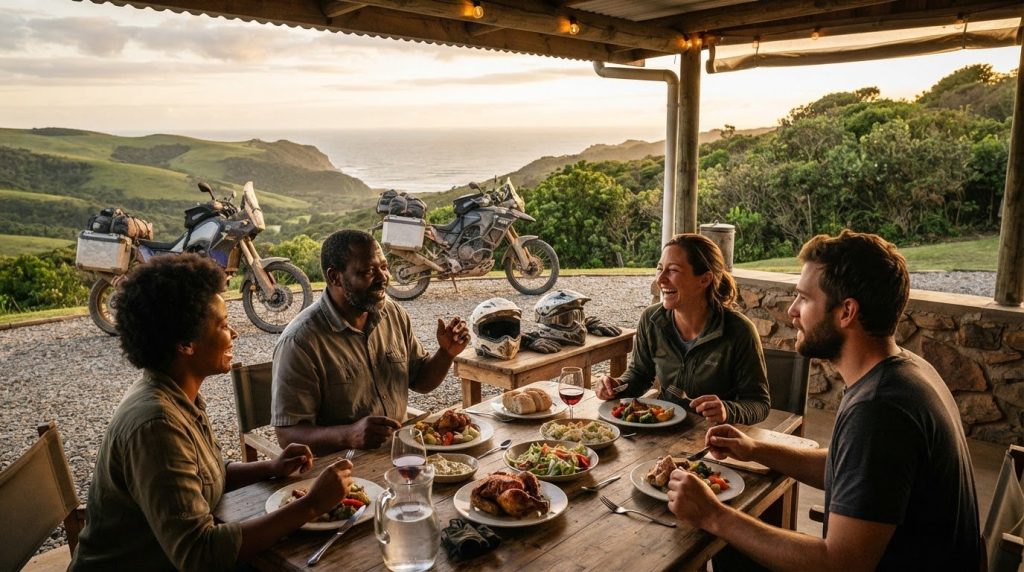
Adventure travel without roughing it is possible: combine outdoor experiences with comfortable accommodation, satisfying meals and a pace that leaves room to recharge. In South Africa, a well-planned journey can bring you close to wild landscapes without making basic comfort part of the challenge. Choose a route and style of travel that suit you, then give yourself time to enjoy each place.
You don’t have to choose between a thrilling day outdoors and a restful evening. This guide explores remote destinations where comfort and adventure sit side by side, places where the outdoors is woven into everyday life, and ways to match activities and accommodation to your travel style. From the character of a lodge stay to the freedom of a guided journey, discover how thoughtful planning can make the wild feel exhilarating, not exhausting.
Key Takeaways
- Choose remote escapes that pair outdoor exploration with comfortable accommodation and time to pause between activities.
- Look for destinations where adventure is woven into daily life, so local experiences become part of the journey.
- Match activities to your group’s experience and energy; an adventurous trip doesn’t have to mean pushing to your limits.
- Compare glamping, lodge stays and guided tours by the balance of comfort, immersion and support you want.
1. Remote destinations paired with luxury accommodation
Adventure travel without roughing it pairs demanding landscapes with welcoming places to rest. A remote itinerary can combine outdoor activities, comfortable accommodation and satisfying dining. Plan transport, timings and experiences before departure, then leave space between outings to pause and recharge. That balance matters in any country, especially when long transfers make a packed schedule tiring.
For a guided Silk Road tour, comfortable accommodation can soften days spent exploring historic routes and wide-open terrain. Choose an itinerary that explains how travel between stops is organised and where each day ends. A restful room and an unhurried meal can give the journey a restorative rhythm without taking away the sense of discovery. Advance planning helps connect transport, guiding and overnight stays into one coherent route.
Travelling without a detailed plan? Book your first night’s accommodation before setting off. You’ll have a known arrival point, time to settle in and a base for deciding what comes next. In a remote area, plan how you’ll reach your stay and save its address offline. You can then adapt later nights to your route, the weather and your energy.
Comfort doesn’t always require a luxury lodge. Hostel-style accommodation can provide a practical bed and shared spaces while keeping you close to local life. Prioritise the features that matter for a good rest, such as a private room, a quiet sleeping area or meal options. Treat each stay as part of the itinerary, not just somewhere to sleep.
Pack light, but prepare for changes in terrain and temperature. Bring comfortable walking shoes, layered clothing, sun protection, a reusable water bottle and personal essentials. Keep travel documents and medication easy to reach, and use a small day bag for outings.
Large group gatherings and travel can increase the risk of COVID-19 spread, according to the World Health Organization. Consider group size and shared spaces when planning stays and activities, particularly when choosing between a large gathering and a smaller guided experience.
2. Destinations with established adventure lifestyles
Some destinations make outdoor activity part of the daily rhythm. In Iceland, an itinerary can pair waterfalls and glaciers with geothermal bathing and farm-to-table dining. That contrast gives active days a restorative finish, while local food and hot springs offer a taste of life beyond the trail. Build in walking time around each stop, rather than treating every view as a quick photo opportunity.
Cambodia offers a different example: Angkor Wat can be visited during an annual half marathon that winds through the ruins. The event connects movement with a historic setting, showing how adventure can grow from culture as well as landscape. In South Africa, you could shape a trip around walking in the Drakensberg or exploring the Garden Route, then choose quieter activities for recovery days.
To choose a reputable adventure tour operator in South Africa, compare the published itinerary, activity level, accommodation approach and what the tour includes. Look for clear information about guiding, transport and how the schedule responds to changing conditions; these details show how the experience is organised.
Adventure travel can involve falls, changing weather, fatigue and delays in remote areas. Read your insurance policy to understand whether it covers your planned activities, including medical care and evacuation, and note any exclusions. Keep the policy details accessible during the trip.
Before booking, match the destination’s everyday pace to your own. If walking and active excursions are central, choose an itinerary with genuine downtime and comfortable overnight stops. If you prefer a guided ride through South African scenery, explore guided motorcycle tours in South Africa as one way to experience the country’s open roads and varied landscapes.
3. What adventure activities are suitable for beginners and families?
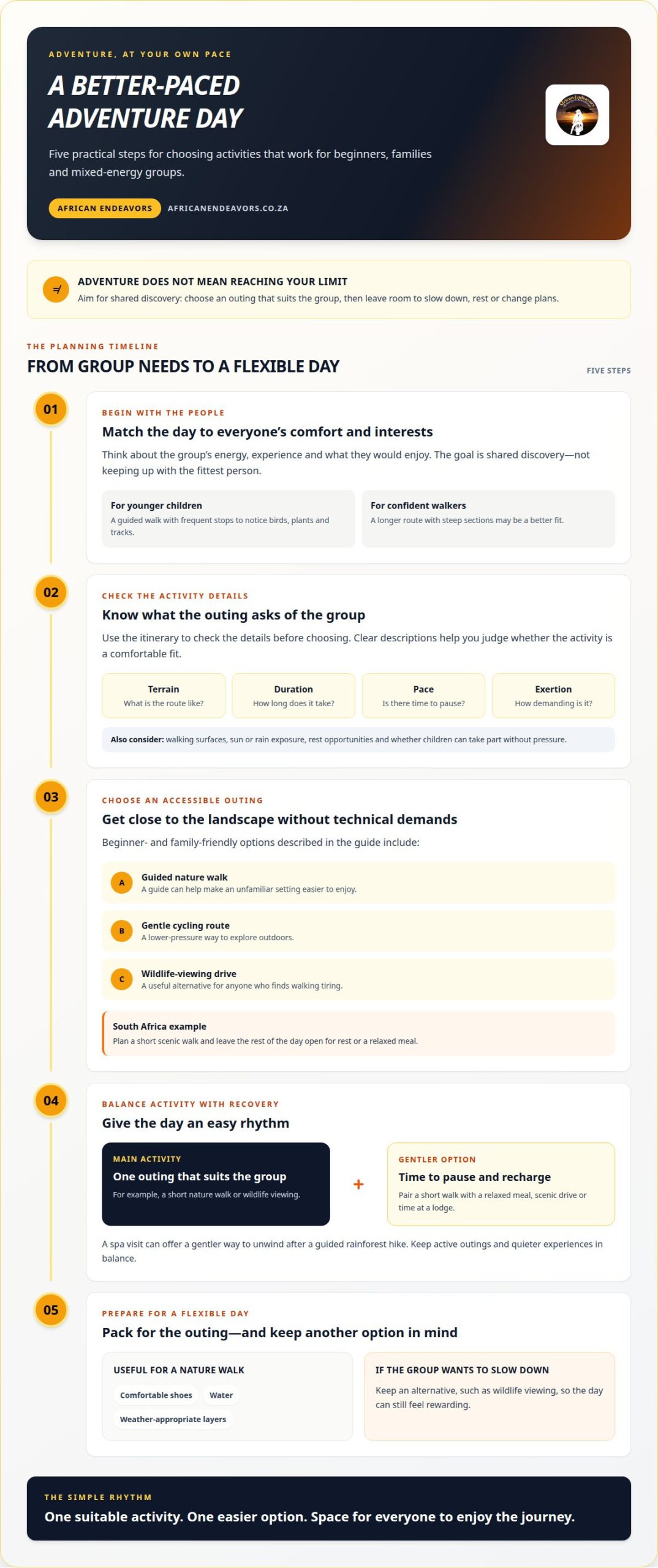
Adventure doesn’t need to mean reaching your physical limit. If you’re travelling with beginners or family, choose activities that allow a comfortable pace and straightforward choices. A guided nature walk, gentle cycling route or wildlife-viewing drive can bring you close to the landscape without requiring technical experience. In South Africa, plan a short scenic walk and leave the rest of the day open for rest or a relaxed meal.
Use the itinerary to judge whether an activity fits everyone. Look for clear descriptions of terrain, duration, pace and the level of exertion involved. A family with younger children might enjoy a guided walk with frequent stops to notice birds, plants and tracks. A longer route with steep sections may suit confident walkers better. The aim is shared discovery, not keeping up with the fittest person in the group.
Guided experiences can make unfamiliar settings easier to enjoy. A privately guided rainforest hike, for example, can combine walking with wildlife spotting, while a spa visit offers a gentler way to unwind afterwards. In a national park, wildlife viewing from a vehicle can suit those who find walking tiring. Mix active outings with quieter experiences, such as a scenic drive or time at a lodge.
Before choosing an activity, match its demands to the group’s comfort and interests. Consider walking surfaces, sun or rain exposure, opportunities to rest and whether children can participate without pressure. For a nature walk, pack comfortable shoes, water and weather-appropriate layers. Keep an alternative in mind, such as wildlife viewing, so the day still feels rewarding if someone prefers a slower pace.
A well-balanced adventure lets everyone take part in a way that feels enjoyable. Choose one main activity for the day, then pair it with an easier option, such as a short walk followed by a relaxed meal. This simple rhythm leaves space for excitement, curiosity and recovery throughout the journey.
4. How do glamping, lodge stays and guided tours compare for comfort and adventure?
Glamping brings the outdoors close while providing a more settled base than traditional camping. A tented stay near a South African reserve, for example, can put wildlife viewing and open skies within easy reach. Its appeal is immersion: wake surrounded by nature, then head out for an activity. Comfort depends on the facilities, so compare them with the level of convenience you want.
A lodge offers a different balance, with a permanent place to return to after exploring. In the Kruger region, a lodge-based itinerary might centre on wildlife viewing, relaxed meals and time to rest between outings. This suits travellers who value a dependable base and less time managing camp arrangements. The day’s excursions bring the adventure, while the lodge offers a calmer counterpoint.
A guided tour focuses on the journey and the experience of moving through a destination. It can bring together transport, planned activities and overnight stops, making logistics part of one itinerary rather than separate decisions. For example, a privately guided rainforest hike can pair wildlife spotting with a spa visit. Guided travel works especially well when local knowledge and a structured route matter more than choosing every detail independently.
Compare your options by asking what you want most: time close to nature, a settled base or the experience of travelling along a route. Check accommodation details, activity levels, travel between stops and how much unscheduled time the itinerary allows. You can combine styles, too: stay at a lodge and add a guided excursion for a fresh perspective.
If a scenic ride feels like your ideal way to experience South Africa, explore guided motorcycle touring and consider how the route itself can become part of the adventure.
African Endeavors: The Wild Coast & Drakensberg Tour
African Endeavors’ The Wild Coast & Drakensberg Tour suits travellers seeking a guided motorcycle journey through striking South African landscapes. The fully supported tour brings structure to the ride, while the route connects two distinct regions through changing scenery and open roads. Choose this tour when you want the journey itself to be the adventure, with the tour organised for you.
For a different landscape, consider The Kruger Park & Panorama Route Tour or The Garden Route & Route 62 Tour. Riders looking for off-road terrain can explore Off-Road Dirt Bike Safaris. Each offering provides a different way to experience South Africa, so choose according to the riding style and scenery that appeal to you.
Visit africanendeavors.co.za to explore the tours and choose the journey that fits your idea of adventure.
Make space for your next adventure
The best journeys begin with a clear sense of how you want each day to feel. Decide whether you’re drawn to open-road riding, remote landscapes or a route that balances activity with rest. Then consider your preferred pace, the comforts you value and how much planning you want handled for you.
That’s the promise of adventure travel without roughing it: not removing the wildness, but choosing a way to experience it that feels right for you. Let your priorities shape the route, and leave room for the journey to surprise you.
When you’re ready to take the next step, contact African Endeavors to plan your trip. Your South African adventure can start with a conversation about the kind of journey you’re hoping to take.
Frequently Asked Questions
What does luxury adventure travel mean?
Luxury adventure travel combines active experiences with comfort and thoughtful logistics. The difference is how the journey feels between activities: you might spend the day exploring outdoors, then return to comfortable accommodation and a carefully planned meal. It’s adventure travel without roughing it, with guided outings, restful stays and a pace shaped around your priorities.
What are the best soft-adventure trips in South Africa?
Good soft-adventure options include scenic touring, wildlife viewing and nature walks that let you set a manageable pace. For a motorcycle-based journey, African Endeavors offers The Garden Route & Route 62 Tour, The Kruger Park & Panorama Route Tour and The Wild Coast & Drakensberg Tour. Choose by the landscapes and riding experience you want, then balance active days with time to relax.
Which South African lodges offer adventure activities with comfortable accommodation?
Choose a lodge near the activities you want, then compare its accommodation and the way outings fit your preferred pace. For a wildlife-focused stay, consider whether the lodge can arrange viewing experiences; for a walking break, look for access to guided nature outings. Check what the accommodation itself provides, such as dining and places to rest, so comfort remains part of the experience.
How much do luxury adventure holidays in South Africa cost?
The price depends on the case and is given after a quote request; cost factors include the route, duration, motorcycle, accommodation and support arrangements. For a guided motorcycle holiday, compare the itinerary and what the package covers rather than judging by the accommodation alone. A longer journey or different riding style can change the overall cost, so base your budget on the trip you want.
When is the best time to book a South African adventure holiday?
Arrange transport, timings and experiences in advance, and leave space between outings to pause and recharge.
